
Can Hungary’s Famous Paprika Survive a Hotter Climate?
Paprika may be sitting quietly in your spice cabinet, but in Hungary, it’s a big deal.
The bright red spice is an essential part of Hungarian cooking and culture. It gives dishes such as goulash their famous color and flavor, and strings of red peppers drying outside homes were once a familiar sight in Hungary’s countryside.
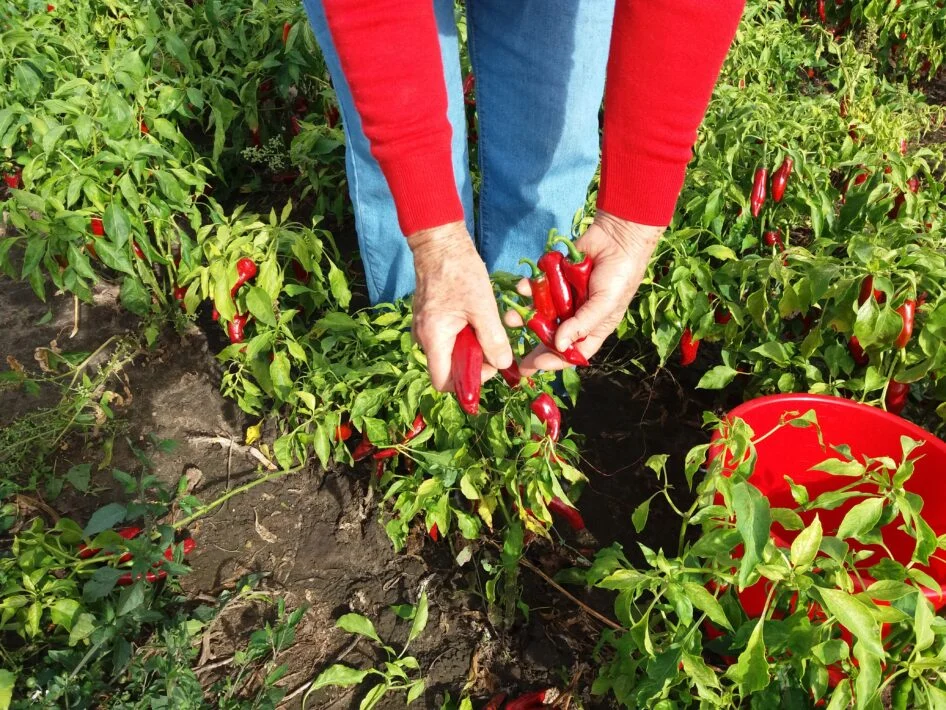
But today, the farmers who grow those peppers are struggling. Extreme heat, drought, pests, rising costs, worker shortages, and cheaper imports are making Hungary’s famous paprika increasingly difficult to produce. And climate change is adding even more pressure.
A Brutal Summer for Paprika Farmers
Imagine working in a field from before sunrise until nearly midnight, trying to keep your crops alive.
That’s what Hungarian farmers Nikoletta Pajsan Nagy and Laszlo Pajsan faced during an exceptionally hot, dry summer.
Because power lines cross much of their 6-acre farm, they couldn’t irrigate all their pepper plants. Instead, they repeatedly loosened the soil around the plants to help them survive.
Some days, they worked as long as 20 hours.
Against the odds, their crop survived and was even better than expected. But other paprika growers haven’t been so lucky.
Climate Change Is Making a Tough Job Even Tougher

Growing food has always depended on the weather. But as Earth warms, farmers are facing conditions that can push crops beyond what they are used to.
Hungary experienced its driest summer since records began in 1901 and its second-hottest summer on record, according to the country’s weather service.
Paprika growers are seeing longer droughts and more extreme heat, while new pests and plant diseases are also spreading.
That means farmers may need more water, more labor, and more money just to produce the same crop.
And Hungary isn’t alone. Around the world, farmers are having to adjust to changing rainfall, hotter temperatures, and more extreme weather.
Hungary Is Growing Much Less Paprika
The decline of Hungary’s paprika industry is dramatic.
In 1979, farmers grew paprika peppers on more than 13,000 hectares, or about 32,000 acres.
By 2024, that had dropped to just 1,410 hectares, or roughly 3,500 acres.
That means the amount of land devoted to paprika production has fallen by nearly 90% in about 45 years.
Climate change isn’t the only reason.
Hungarian farmers also compete with cheaper paprika imported from China and parts of South America. At the same time, finding people willing to do the hard work of harvesting peppers by hand has become increasingly difficult.
One paprika grower told AFP that her family once farmed about 15 acres of peppers. Today, they grow only about half that much because they can’t find enough seasonal workers. She works as a teacher, while her brother works as a firefighter, because the family can no longer make a living from paprika farming alone.
More Than Just a Spice
Losing Hungarian paprika would mean losing more than a crop.
Peppers originally came from the Americas and arrived in Hungary centuries ago. They flourished in the sunny, fertile areas around Kalocsa and Szeged, which eventually became famous for producing paprika.
By the 1800s, paprika had become an important symbol of Hungarian identity, alongside traditional clothing, folk art, and other customs.
Today, it remains an important ingredient in traditional Hungarian stews, soups, and other dishes. The paprika produced around Kalocsa and Szeged is considered so special that both regions have protected status in the European Union.
But even Hungarian eating habits are changing. Younger generations are cooking fewer traditional dishes and choosing meals that are quicker and easier to prepare. That means demand for traditional paprika is changing at the same time farmers are struggling to produce it.
When Climate Change Reaches the Dinner Table
We often talk about climate change in terms of rising temperatures, melting glaciers, stronger heat waves, drought, and extreme weather.
But climate change can also show up in much more familiar places: our farms, kitchens, grocery stores, and dinner plates.
Coffee, chocolate, wine grapes, olives, and many other crops are already being affected by changing growing conditions around the world. Hungary’s paprika farmers are another example of how a warming climate can add stress to foods people have grown for generations.
And when a traditional crop disappears, we risk losing something that can’t easily be measured in acres or dollars.
We can lose a piece of a culture.
For Hungarians, paprika is part of family recipes, community celebrations, and traditions passed from one generation to the next.
That’s what makes this story bigger than one little jar in the spice cabinet. Climate change isn’t only changing our weather. It’s beginning to change the foods we grow, the traditions we keep, and the pieces of our history we pass along to the next generation.
For more details, visit: https://phys.org/news/2026-10-hungary-dwindling-paprika-signature-spice.html It’s behind a paywall, which is why I’m reporting this!
Keep up to date on the latest climate information right here!