Environmental Justice: Why Your Zip Code Can Determine Your Health
Take a deep breath. Now picture filling a glass of water at your kitchen sink.
Most of us don’t think twice about either one. But here’s something you may not know: in the United States, how clean your air and water are depends a lot on where you live — and on who your neighbors are. I just returned from Humboldt County, where I witnessed this first hand. I was absolutely horrified.
That’s not an accident. And the fight to fix it has a name: environmental justice.
What Does “Environmental Justice” Actually Mean?
It’s a simple idea. Everyone deserves clean air, clean water, and a safe place to live — no matter their race, income, or zip code.
It also means people get a real say in what gets built next door.
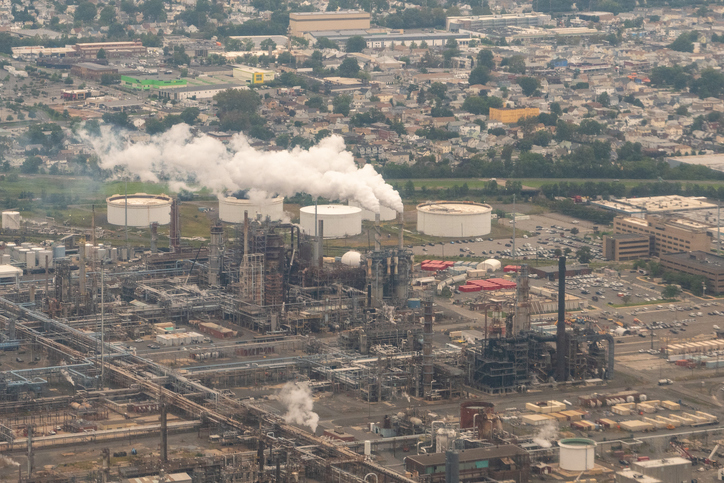
Here’s the problem. For decades, some of the dirtiest things we build — landfills, highways, refineries, and chemical plants — have ended up in the same kinds of neighborhoods over and over. Low-income neighborhoods. Black, Latino, and Native American communities.
Think of a big family dinner where one person gets stuck doing the dishes every single night. Everybody ate. But one person always gets stuck cleaning up.
That’s what pollution looks like in America.
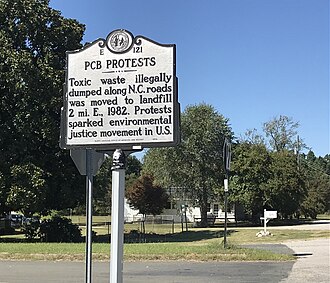
A North Carolina Community Helped Spark the Environmental Justice Movement
In the summer of 1978, someone illegally dumped oil laced with PCBs — toxic chemicals linked to cancer — along 240 miles of North Carolina roadsides. That’s roughly the distance from New York City to Washington, D.C.
The state needed somewhere to put 60,000 tons of contaminated soil. It chose Afton, a small rural community in Warren County, where about 60% of residents were Black.
Neighbors fought the plan in court for four years. They lost.
So, in the fall of 1982, when the dump trucks rolled in, people lay down in the road to stop them.
The protests lasted seven weeks. More than 500 people were arrested.
The trucks got through anyway — more than 7,000 loads. But something much bigger had started. A civil rights fight and an environmental fight had become the same fight.
Five years later, the United Church of Christ examined the problem nationwide. Its groundbreaking 1987 report, Toxic Wastes and Race in the United States, found that race was the strongest predictor of where hazardous waste facilities were located.
Even stronger than income.
Who Makes the Pollution — and Who Breathes It?
In 2019, a team of scientists led by Christopher Tessum at the University of Washington studied tiny particles of air pollution called PM2.5. These particles are about 30 times smaller than the width of a human hair — small enough to travel deep into your lungs. Researchers compared the pollution created by the goods and services people use with the pollution they actually breathe.
Here’s the kicker: Black Americans breathe about 56% more of this pollution than they cause. For Hispanic Americans, it’s 63% more.
Meanwhile, White Americans breathe about 17% less than they cause.
And it’s not because communities of color create more pollution. As Tessum explained, “In fact, the opposite is true.”
A Place Called Cancer Alley
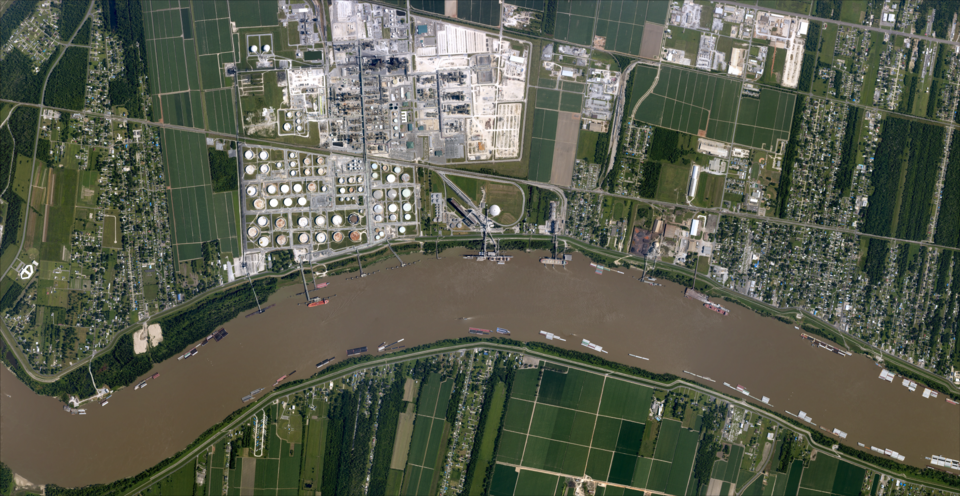
Along an 85-mile stretch of the Mississippi River in Louisiana, more than 150 petrochemical plants and refineries crowd the riverbanks. Locals call it Cancer Alley.
In St. John the Baptist Parish, a mostly Black community lived for decades next to a plant that made neoprene — the stretchy rubber in wetsuits. In 2018, EPA data showed one neighborhood there had the highest cancer risk from toxic air pollution in the country.
Robert Taylor, who lives there, started a group called Concerned Citizens of St. John. They marched. They sued.
In March 2025, the federal government dropped its pollution lawsuit. But two months later, Denka shut the plant down anyway, saying it was losing too much money.
The air is cleaner there today. And it’s because the neighbors refused to quit. Unfortunately, their fight isn’t over. 150 to 200 petrochemical and fossil fuel plants.
Closer to Home: Samoa, California
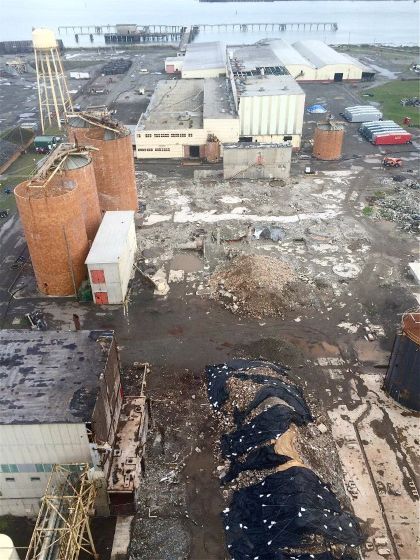
Credit: Humboldt waterkeeper
Now let’s head to California’s far north coast, where I visited last week. Humboldt County is home to the Blue Lake Rancheria Tribe and several other Tribal communities.
Samoa is an old lumber town of about 230 people on a narrow strip of land beside Humboldt Bay. In 2001, the entire town was purchased by the Danco Group.
Danco built something the region badly needs: 80 affordable townhomes for families earning just 30% to 50% of the area’s median income.
But take a look at what’s around them.
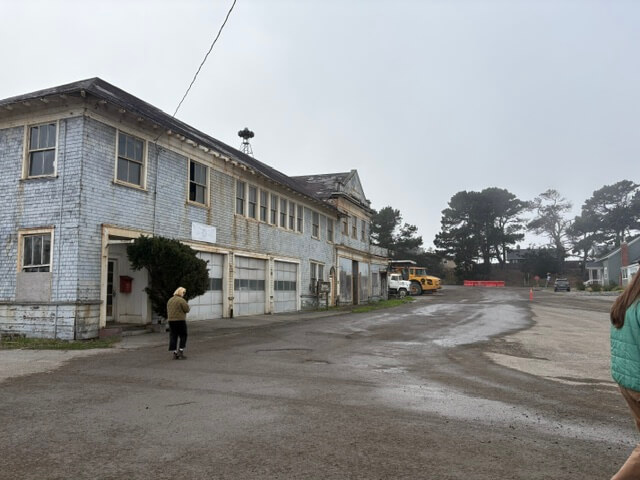
Credit: Susan Callery
A pulp mill operated near the town for more than 40 years. In 2014, after the mill closed, the EPA discovered millions of gallons of hazardous waste stored in tanks just 800 feet from Humboldt Bay. Some of those tanks were reportedly “leaking or failing.”
During my visit, I saw chunks of concrete, abandoned logs, exposed rebar, and rusty old equipment in areas where children play and people walk their dogs. Some of the debris may contain hazardous substances left behind by the area’s industrial past.
And then there’s the paint.
Samoa property owner Dan Shahin wrote in a letter to a local news website that abandoned, century-old company houses nearby are shedding lead paint in areas where children play. He also claimed that the county has failed to act.
These allegations raise serious questions about whether residents are being adequately protected from possible exposure to toxic materials.
Meanwhile, residents are still waiting for a grocery store that was reportedly promised as part of the town’s redevelopment.
In other words, families with limited incomes are living alongside pollution left behind by industries that closed decades ago.
Climate Change Piles On
Now add a hotter planet.
Back in the 1930s, government-backed housing maps marked many Black and immigrant neighborhoods as too “hazardous” for home loans. This discriminatory practice became known as redlining.
For decades afterward, many of those neighborhoods received less investment, leaving them with fewer parks, fewer trees, and more heat-absorbing pavement.
And today, they’re paying the price.
Researchers led by Jeremy Hoffman compared summer temperatures in 108 U.S. cities. They found that formerly redlined neighborhoods were, on average, about 2.6°C hotter than neighborhoods once rated “best.” That’s almost 5°F!
In some cities, the difference reached 7°C — nearly 13°F.
As climate change brings more extreme heat, these neighborhoods face even greater risks.
Washington Stepped Back. Some States Stepped Up.
For decades, federal agencies were required to consider whether pollution and other environmental hazards unfairly harmed certain communities.
In January 2025, President Trump revoked those requirements.
Two months later, EPA Administrator Lee Zeldin announced plans to close the agency’s environmental justice offices. He argued that environmental justice funding had been directed toward “left-wing activists” rather than environmental cleanups.
The EPA also took down EJScreen, a free online mapping tool that allowed anyone to look up pollution and environmental risks in their own neighborhood.
The good news? Some states are moving forward with their own protections.
- New Jersey passed a groundbreaking environmental justice law in 2020. It requires certain polluting facilities to examine how proposed projects could add to the pollution already affecting overburdened neighborhoods.
- California released CalEnviroScreen 5.0 in July 2026. This tool maps pollution and other challenges facing communities across the state. California has also directed billions of dollars in climate investments toward disadvantaged and low-income communities.
What Can Actually Help
- Look up your own neighborhood. In California, try CalEnviroScreen 5.0. Everywhere else, volunteers at Public Environmental Data Partners rebuilt the EJScreen map the EPA took down. Take these with a grain of salt. The region where Samoa is located shows low pollution.
- Show up. Decisions about the next warehouse, highway, or power plant get made at permit hearings and planning meetings. Most of us never go. Go.
- Call your lawmakers. With Washington stepping back, state capitals are where the rules are being written. And Congress still controls the EPA’s budget.
- Back the groups doing the work. Neighborhood groups like Concerned Citizens of St. John win these fights. Find the one near you.
The Trucks Got Through. The Movement Didn’t Stop.
The people of Warren County couldn’t stop those dump trucks in 1982. But more than 40 years later, what they started is still here — in courtrooms, in statehouses, and on front porches from Louisiana to California.
Clean air and clean water shouldn’t depend on your zip code.
Our kids and grandkids — all of them — are counting on us to make that true.
Want to dig even deeper into human impacts? Check out https://eco-nana.com/category/human-impact/