Fact-check
Series of fact-checking posts
-
The Biggest Climate Culprit Isn’t What Vegans Think
By Holly Shaftel, contributing writer After 12 years in climate science communications, I paused my career to become an animal rights activist, targeting animal agriculture. I had spent years exposing false information about climate change. So, I thought the people in my new community would understand the science. I was wrong. Many animal rights activists think that raising animals for food causes more climate change than burning fossil fuels. But when I traced that claim, the same sources emerged: • Misleading “documentaries” — essentially propaganda — such as Cowspiracy • Well-meaning platforms such as Unchained TV that get the science wrong • Individuals such as Dr. Sailesh Rao, a climate…
-
The Truth About Lithium Mining: How EV Batteries Compare to Fossil Fuels
One of the biggest criticisms of electric vehicles (EVs) is that they use lithium. You’ve probably seen comments online asking, “Have you looked into lithium mining?” The answer is yes. Lithium mining has environmental impacts. Every type of mining does. But many of the claims shared online leave out some important facts. They also ignore a simple reality: Most of us use lithium every single day. You’re Probably Using Lithium Right Now If you’re reading this on a smartphone, tablet, or laptop, you’re using lithium. It’s also found in: Yet somehow, lithium only becomes a problem when it’s inside an electric vehicle. Where Does Lithium Actually Come From? One common…
-
Unmasking CO₂ Myths: The Science You Need to Know
Welcome to the third part of my Fact-Checking Series, where I dig into myths about carbon dioxide and clear up misunderstandings about climate. Carbon dioxide, or CO₂, is an invisible gas that is all around us in the air. It’s made up of one carbon atom and two oxygen atoms. People and animals breathe it out when we exhale, and plants take it in to help them grow through a process called photosynthesis. CO₂ is also a strong greenhouse gas, which means it traps heat in the Earth’s atmosphere. Without CO₂, our planet would be too cold for us to live. While this is natural and important for life, too…
-
Is Global Warming Just an Urban Heat Island Effect? Scientists Say No
Have you ever noticed it’s hotter in a city than in the countryside? That’s not your imagination — it’s a real thing called the urban heat island effect. But some people claim this means global warming isn’t real, that we’re just measuring hot pavement instead of an actual warming planet. It may sound convincing at first, but the evidence doesn’t support it. First, What is the Urban Heat Island Effect? Cities are full of concrete, asphalt, and buildings that soak up heat during the day and release it slowly at night. There aren’t many trees to provide shade or moisture. So, cities end up several degrees warmer than the forests…
-
What’s Killing Gray Whales? (Hint: It’s Not Wind Energy)
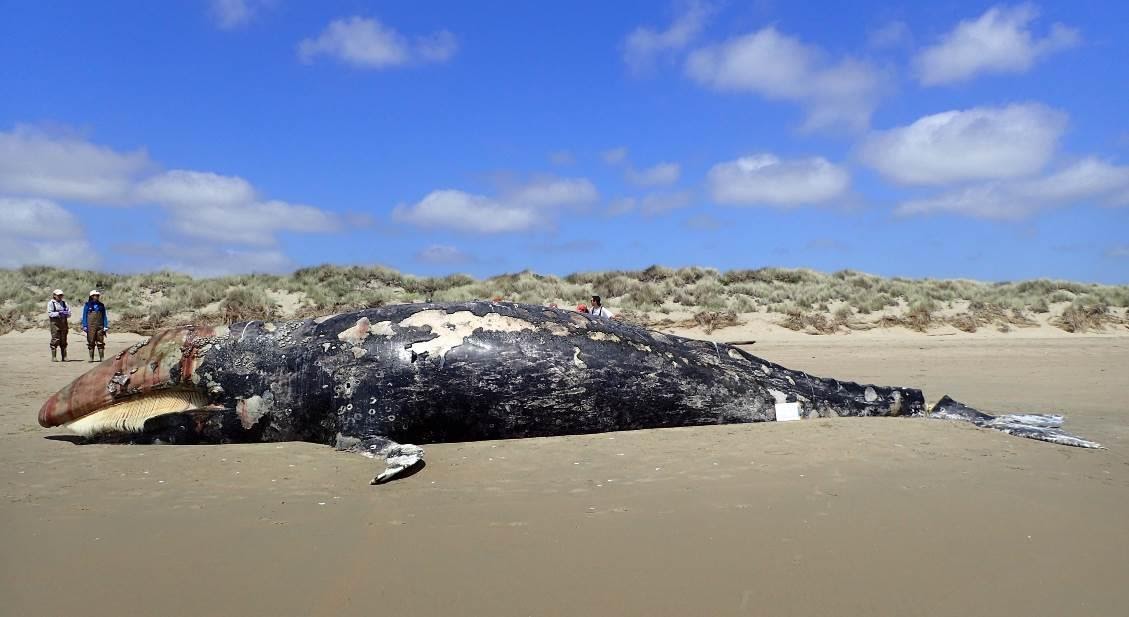
Scientists are sounding the alarm about a gray whale crisis up and down the Pacific Coast. The culprits are well documented — and offshore wind isn’t one of them. San Francisco Bay is famous for its Golden Gate Bridge, its ferries, and its busy ports. But lately, locals have been noticing something new in those waters: gray whales. Huge, barnacle-covered, and beautiful — they’ve been showing up in growing numbers since 2018. Their arrival has brought both wonder and worry. People line the shores to watch them feed and swim. Researchers race to understand why so many of them are starving. And too often, the whales end up dead. In…
-
Truth or Trickery? How to Tell Science from Propaganda
I spend way too much time on social media platforms. I often come across various forms of propaganda and disinformation, especially about climate change and renewable. Bots create some of these posts. Bad actors funded by billionaires and dirty energy produce others, and some come from people who genuinely can’t distinguish between science and propaganda. The Early Days of Propaganda in America Even though the word propaganda became popular in the United States around World War I, the idea behind it is much older. One of the first groups to use it were the ancient Greeks. They didn’t have printed ads or movies like we do today, but they still…
-
Nuclear Power: Clean Energy Hero or Environmental Headache?
I live near the Diablo Canyon Nuclear Power Plant. Lately I’ve seen a flood of posts claiming that nuclear power is the cleanest and cheapest form of energy. It sounds promising — after all, we urgently need low-carbon energy sources to tackle climate change. But every technology has trade-offs, and nuclear power is no exception. From its enormous water use and radioactive waste to its reliability and carbon-free output, the truth is far more complex than the headlines suggest. So let’s look at the facts — the real pros and cons of nuclear power. The Bright Side of Nuclear Power Low carbon emissions: Once a nuclear power plant is running,…
-
No, LA Didn’t Run Out of Water During the Fires
Fact-check It’s been almost eight months since wildfires tore through Los Angeles County, but the wild rumors just won’t quit. Some people say “LA ran out of water.” Others claim “California didn’t take care of its forests.” Then there are the over-the-top ones—like fires being part of a plot by “global elites” to clear land, or a tiny fish called a smelt being the cause. And my favorite? That Governor “Newscum” (yep, that’s the nickname floating around online) refused to sign a “magic” water plan that supposedly would have sent endless gallons south every day. Sounds like a comic book, right? But here’s the real question: why do these conspiracy…
-
How Reliable Are Satellite Temperature Measurements?
Some people who reject climate science claim satellites are the “real truth-tellers” when it comes to Earth’s temperature. But here’s the kicker: satellites don’t actually measure temperature at the surface where we live—they measure microwave radiation coming from oxygen molecules way up in the atmosphere. That data has to be modeled and pieced together like a giant puzzle. Ground thermometers, on the other hand, give us direct, accurate readings right where it matters most. That’s why scientists worldwide rely on them to track how fast our planet is heating up. Here’s why ground-based measurements are the gold standard: Satellites don’t measure temperature directly Satellites don’t measure temperature directly, or even…
-
Is Green Hydrogen Really the Future of Clean Energy?
You’ve probably seen headlines saying that green hydrogen is the next energy savior. Some even say it could help us fight climate change and keep our lights on. But before we celebrate, let’s put it under a microscope. Hydrogen Really Isn’t a Fuel Source A lot of articles call hydrogen an “energy source.” But that’s not exactly true. Hydrogen doesn’t just appear out of thin air — we have to make it using other energy sources. Think of it more like a battery that stores energy made from something else, like wind or solar power. To create hydrogen, we usually use a process called electrolysis — splitting water into hydrogen…
-
The Truth Behind the Offshore Wind: Who’s Really Opposed?
Part One When I retired from NASA’s Jet Propulsion Lab in early 2024 and moved to California’s Central Coast in 2022, I had big plans for my next chapter—spending more time with my grandkids, and finally taking those classes I’d been dreaming about: geology, astronomy, maybe even jewelry making and flower arranging. But those plans took a turn when I started reading wild claims about offshore wind: that it kills whales, is worse for the environment than fossil fuels, and would ruin our coastline. After years of working in science communications and battling climate misinformation, I knew better than to take those claims at face value. So I did what…
-
Cracking the Ice Myth: What’s Really Happening in Antarctica
Some folks will say just about anything to deny that humans are heating up the planet. Lately, I’ve seen way too many posts claiming that Antarctica is gaining ice. So let’s clear this up—again. First: Weather is not the same as climate. A snowstorm or cold snap doesn’t mean global warming isn’t real. Second: Climate change doesn’t move in a straight line. It’s more like a rollercoaster—up and down, but overall heading in a downward direction. That’s because Earth’s systems are complex. Natural patterns, like ocean currents and air pressure systems, can temporarily speed up or slow down warming in different places. So, What Caused the Short-Term Gain in Antarctica?…
-
How to Spot Fake Graphs
Fake graphs pop up on social media all the time. And if graphs confuse you, you’re not alone—I’ve felt that way too! With all the lines, numbers, and labels, they can seem boring, messy, or even like they’re trying to trick you. But once you learn how to read them, graphs actually make things easier. They’re like a shortcut to show patterns or comparisons without a big wall of text. This guide will help you spot misleading and fake graphs faster—so you won’t fall for the tricks. Why Even Use a Graph? Sometimes, it’s the only way to clearly show trends, like how a population grows over time, or which…
-
Scientific Consensus: It’s Not a Vote, It’s the Evidence!
Scientific consensus is when most scientists agree on something after looking at a lot of evidence and doing many studies. Think of it like this: if 100 doctors all study the same illness and 97 of them say, “Yep, we’ve tested this, and this is what we’ve found,” then we say there’s a consensus—a strong agreement—on that topic. But it’s important to know: it’s not a vote. Scientists don’t just raise their hands and pick an answer. Instead, they do experiments, gather data, and check each other’s work. If many scientists get the same results over and over, that’s how a consensus forms. Examples of Scientific Evidence Include: Smoking causes…
-
“An Inconvenient Truth”: More Right Than We Knew
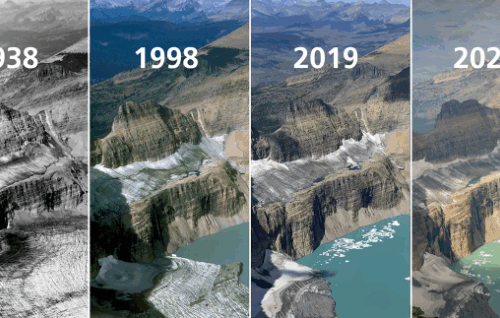
People laughed (and still are) at Al Gore over his film, “An Inconvenient Truth”. The planet’s not laughing. I’m frankly tired of the lie that Al Gore’s predictions from his film were all wrong. Yeah, he got a couple of things wrong, especially the timing. But the science behind what he said? Still very real—and in some cases, it’s even worse than he predicted. Let’s break it down: Claim: “Within the decade there will be no more snows of Kilimanjaro.” What Really Happened: Timing was off, but the ice is disappearing quickly. Gore was a little early on the timing, but he wasn’t wrong about the big picture. The glaciers…
-
Celestial Sizzle? Burning Through The “All Planets Are Warming” Myth
Are All Planets Warming? Nope—that’s not true! The notion that “all planets are warming” is a myth. Here’s what scientists actually know about the planets in our solar system: Mercury, Too Hot and Too Cold! OK, how can that be? Mercury is super close to the Sun and doesn’t really have an atmosphere. That means it doesn’t have a climate like Earth’s. Even though a year on Mercury lasts only 88 Earth days, its day is super long—176 Earth days! Also, since it hardly tilts on its axis (only about 2°), it doesn’t have real seasons like we do. Believe it or not, temperatures can reach up to 800°F (430°C)!…
-
Fueling the Future: Why EVs Are Better for the Environment
Guest Post by Holly Shaftel When I was on Facebook (maybe five years ago), I once debated an old high school classmate about electric vehicles. I can’t remember the details, but this person replied to my post about electric trucks, spewing all the falsehoods she likely picked up from her social circle, including those about battery production. As a proud EV owner and former NASA climate website editor, I’m used to “science bombing” online trolls, bots, and deniers who work for Big Oil and other bad actors. So, it might not surprise you that misinformation (unintentionally false information) and disinformation (intentionally false information) around electric cars often came up in my…
-
Fact-Checking Series No. 5: Busting Yet Another Myth About Climate Change
Let’s Call a Spade a Spade! I’m back, busting yet another myth about climate change! Ever heard of the Competitive Enterprise Institute (CEI)? It’s a “think tank” (a group that shares ideas) that doesn’t believe humans are causing climate change. Sounds wild, right? Even more interesting, they’ve gotten money from groups that don’t like environmental rules, like the Charles Koch Foundation and ExxonMobil. Through 2016, the Lynde and Harry Bradley Foundation contributed over $2.2 million to CEI.—that’s a whole lot of cash! Now, CEI once published a list basically saying, “People have been predicting environmental disasters since the 1960s, and they’re still doing it today!” But are these predictions really…
-
Fact-checking Series No. 4: Busting Myths About Climate Change
Climate change is a big issue, and there are a lot of myths about climate change out there that can make it hard to know what’s true. Some people think it’s just a natural cycle, while others believe small actions don’t matter. These ideas can cause confusion and slow down efforts to fix the problem. In this article, we’ll break down some common myths about climate change and explain the real facts in a simple way, so everyone can tell what’s true and what’s not. Scientists predicted global cooling in the 70s I see this myth about climate change on social media almost every day. It’s actually a myth that…
-
Fact-Checking Series No. 1: Uncovering the Truth About Climate
I’d love to share with you my new Fact-Checking Series, where I will focus on uncovering the truth about climate and clarifying misunderstandings. I’ll be addressing the usual claims from people who don’t believe that Earth’s climate is changing because of human activities. I’ll start with some of the most common myths I come across on social media every day. Climate’s Changed Before Climate Has Changed Before? Bingo! Who would’ve guessed? Of course, scientists are well aware of this. Uncovering the truth: while Earth’s climate has naturally warmed and cooled over the ages, the rapid warming we’re seeing today can’t be chalked up to natural causes like changes in Earth’s…
-
Fact-checking Series No. 2: Uncovering the Truth About Climate
Welcome back to my Fact-Checking Series! In this episode, we’re digging into some of the biggest myths about climate change. You’ve probably heard people say things like, ‘The climate has always changed,’ or ‘Humans can’t really make a difference.’ Well, today we’re going to break those myths apart and show you what the science really says—clear, simple, and straight to the point. Changes in Earth’s Magnetic Field Are Causing Global Warming Some people say Earth’s magnetic field is causing climate change. Sounds mysterious, right? But here’s the truth: the magnetic field’s main job is protecting us from harmful solar radiation—it doesn’t control Earth’s temperature. Scientists have dug deep into this…