
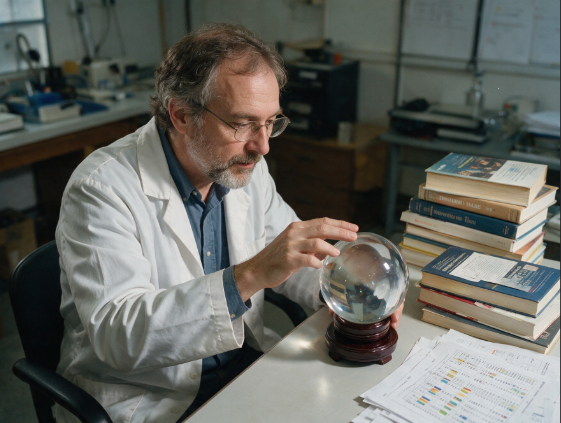
Climate Models: Understanding Earth’s Future Climate
How can scientists predict what Earth’s climate might look like 50 or even 100 years from now? They use one of the most powerful tools in climate science: computer models.
But what exactly are climate models? How do they work? And how do we know we can trust them?
Let’s dig in and take a look.
What Is a Climate Model, Anyway?
Think of a climate model as a virtual Earth inside a computer.
Scientists use these models to understand how our planet’s climate works, how it has changed in the past, and how it might change in the future.
Climate models simulate the movement of air and water, the heating and cooling of the planet, the formation of clouds, and the melting and freezing of ice. They also show how greenhouse gases, such as carbon dioxide and methane, affect Earth’s temperature.
And here’s something important: Climate models aren’t based on guesses. They’re built using the laws of physics, mathematics, and real-world measurements.
These are the same scientific principles that explain how airplanes fly, why objects fall to the ground, and how heat moves from one place to another.
How Do Climate Models Work?

Imagine dividing Earth into thousands of little boxes, including layers that stretch high into the atmosphere and deep into the ocean. That’s basically what scientists do.
For each box, the computer calculates things like temperature, air pressure, humidity, wind, and ocean currents. Then it figures out how conditions in one box affect the boxes around it.
For example, what happens when the ocean warms? More water evaporates into the atmosphere. That extra moisture can affect clouds, rainfall, and temperatures.
The computer repeats these calculations over and over, moving forward through time.
And we’re talking about a LOT of calculations!

A typical global climate model contains enough computer code to fill roughly 18,000 printed pages. Scientists use powerful supercomputers to run these incredibly complicated simulations.
Where Does the Information Come From?
Climate scientists don’t just sit at their computers and make up numbers.
They use decades of observations collected from satellites, weather stations, ocean buoys, ships, and other instruments.
They also study evidence of ancient climates preserved in ice cores, tree rings, ocean sediments, rocks, and more.
Scientists use these measurements to understand Earth’s climate, establish the conditions needed to run models, and check how well the models perform.
The models also account for things that can change Earth’s climate, including:
- Changes in energy from the Sun
- Volcanic eruptions
- Greenhouse gases released by human activities
- Tiny particles in the atmosphere that can reflect sunlight
- Changes in forests, ice, and land use
By combining these factors with the laws of physics, scientists can explore how Earth’s climate responds to different conditions.
How Do Scientists Test Climate Models?
One of the best ways to judge how reliable climate models are is to see how well they recreate the past.
For example, they can give a model information about greenhouse gas levels, volcanic eruptions, and solar activity from the past, then see how closely its results match actual temperature records.
It’s a bit like giving someone a history test before asking them to predict what might happen next.
Scientists also run experiments.
What happens when a model includes only natural factors, such as changes in the Sun and volcanic eruptions?
What happens when scientists add greenhouse gases released by human activities?
The results show just how important human activities are in driving today’s warming.
Models that include only natural factors cannot explain the rapid warming we’ve experienced over the past century. But when scientists include human-caused greenhouse gas emissions, the simulations match the observed long-term warming much more closely.
That’s one of the many ways scientists have confirmed that human activities are driving today’s climate change.
A Climate Model From 1967 Gets It Right
In 1967, two scientists, Syukuro Manabe and Richard Wetherald, developed one of the earliest computer models of Earth’s climate. Compared with today’s models, it was incredibly simple.
But it made an important prediction.
As carbon dioxide increased, temperatures would rise near Earth’s surface while the stratosphere, a layer of the atmosphere high above us, would cool. And that cooling would become stronger higher up.
Why would adding a heat-trapping gas warm one part of the atmosphere while cooling another?
Because greenhouse gases change how heat moves through the atmosphere. They trap more heat in the lower atmosphere while allowing the stratosphere to lose energy.
That difference matters. If an increase in the Sun’s energy were responsible for today’s warming, we wouldn’t expect to see this same pattern of warming below and cooling above.
Scientists call this a fingerprint of human-caused climate change.
Fast-forward to 2023.
Climate scientist Ben Santer and his colleagues examined 36 years of satellite measurements. Their study, published in the Proceedings of the National Academy of Sciences, found that the upper stratosphere roughly 15 to 30 miles above Earth, cooled by about 1 to 2°C (2 to 3.5°F) between 1986 and 2022.
Even more impressive, the researchers found that the fingerprint of human-caused climate change was five times easier to detect high in the atmosphere than near Earth’s surface.
That doesn’t mean climate change is happening five times faster up there. It means the human influence is easier to separate from natural temperature changes.
A prediction made by a simple computer model in 1967 was confirmed by satellite observations more than half a century later.
Manabe received the 2021 Nobel Prize in Physics for his groundbreaking work on climate modeling.

Photo by
Denise Applewhite, Office of Communications
Even ExxonMobil’s Scientists Got It Right
Here’s something else worth knowing.
In January 2023, researchers Geoffrey Supran, Stefan Rahmstorf, and Naomi Oreskes published a study in Science examining climate projections made by Exxon and ExxonMobil scientists between 1977 and 2003.
Yes, the oil company’s own scientists were studying how burning fossil fuels would warm the planet.
And their projections were remarkably accurate.
The researchers found that Exxon’s scientists projected warming of about 0.2°C (0.36°F) per decade, on average. Their projections closely matched the warming that followed and were comparable to those produced by government and university scientists.
Yet in 1999, Exxon CEO Lee Raymond publicly dismissed climate projections as being based on unproven models and speculation.
Exxon’s own scientists had produced accurate climate projections while company leadership publicly questioned the science.
It’s a remarkable example of the difference between what the fossil fuel industry knew and what it told the public.
Are Climate Models Perfect?
Of course not! No scientific model can capture every detail of something as complicated as Earth’s climate.
Some processes, especially clouds, thunderstorms, and certain ocean interactions, are difficult to simulate precisely.
And predicting how much greenhouse gas humanity will release decades from now is another challenge. That depends on decisions we haven’t made yet.
That’s why scientists run models using different possible futures.
For example, what happens if we rapidly cut greenhouse gas emissions? What happens if emissions continue to rise?
Climate models don’t tell us exactly what humans will do. They show us what could happen depending on the choices we make.
Where Have Climate Models Fallen Short?
One important example is Arctic sea ice.
Arctic sea ice has been shrinking dramatically, especially during summer. Many older climate models underestimated how quickly that ice would disappear.
Why?
Because the Arctic is an incredibly complicated system. Sea ice interacts with ocean currents, clouds, winds, and rising temperatures in ways that scientists are still working to understand.
One important process is called the ice-albedo feedback.
Here’s how it works.
Bright white ice reflects much of the Sun’s energy back into space. But when that ice melts, it exposes darker ocean water, which absorbs much more sunlight.
That extra heat warms the ocean and melts even more ice.
Scientists call this a positive feedback loop because the initial warming sets off changes that cause additional warming.
Although scientists understood this process, many older models didn’t fully capture how quickly Arctic sea ice would respond to rising temperatures.
Scientists have since improved how models represent sea ice and its interactions with the atmosphere and ocean.
And this is an important point: When models don’t match observations, scientists investigate why and use what they learn to improve them.
That’s how science works.
Why Do Scientists Use Different Models?
There isn’t just one climate model.
Research groups around the world develop their own models, often using different methods to represent complicated processes.
Scientists compare the results to see where the models agree and where they differ.
When many independently developed models produce similar results, that gives scientists greater confidence in their findings.
Researchers also constantly improve the models as new measurements become available, scientific understanding grows, and computers become more powerful.
What’s the Difference Between Weather and Climate Models?
Ever wonder why weather forecasts sometimes struggle to predict next week’s rain, yet scientists can project global warming decades into the future?
It’s because weather and climate aren’t the same thing.
Weather is what happens today, tomorrow, or next week. Climate is the pattern of weather over many years.
Think of it this way: You can’t predict exactly how much a child will weigh on a particular day 10 years from now. But you can be pretty confident that the child will grow.
Climate models work in a similar way. They aren’t trying to predict whether it will rain in your hometown on June 15, 2050.
They’re calculating how average temperatures, rainfall patterns, heatwaves, and other climate conditions are likely to change over time.
What We Know—and Why It Matters
Climate models are among the most important tools scientists have for understanding our changing planet.
They’re built on well-established laws of physics, informed by real-world measurements, tested against past observations, and continually improved.
They’re not perfect, and scientists are upfront about their limitations.
But consider what we’ve learned. A simple model from 1967 correctly predicted that greenhouse gases would warm Earth’s surface while cooling the stratosphere. ExxonMobil’s scientists accurately projected global warming decades ago. And modern models continue to show that natural factors alone cannot explain today’s rising temperatures.
Climate models have been tested against decades of observations, and their central prediction has held up: Adding greenhouse gases to the atmosphere warms our planet.
The more greenhouse gases we release, the greater the warming and the risks that come with it.
Climate models don’t just help us understand what’s happening to Earth. They help us see how the decisions we make today can shape the world our children and grandchildren inherit.
And that’s why they matter and why I spend my days sharing this information.
Want to dig even deeper? Check out my earlier posts, “How to Spot Fake Graphs” and “Unmasking CO₂ Myths.”