
Butterflies Are on the Move — and That’s a Warning Sign
Butterflies are turning up in places they’ve never lived before. And they’re vanishing from places they’ve called home for generations.
Climate change seems to be a big reason why.
In the largest study of its kind, an international team led by Shawan Chowdhury at Monash University in Australia combed through more than 6,000 records of butterfly movements, covering 1,758 species in 105 countries. Their results, published in August in Nature Ecology & Evolution, are striking: about 1 in 10 butterfly species worldwide has already changed where it lives, and climate change or extreme weather was connected to nearly 80% of those moves.
But here’s the kicker: that 1-in-10 number is almost certainly too low.
It doesn’t mean the other 90% of butterflies are staying put. It means scientists don’t have enough information to know what most of them are doing. In huge parts of the world — especially the tropics — nobody has been keeping track.Butterflies are on the move.
Around the world, they’re showing up in places they didn’t live before — and disappearing from places they once called home. And climate change appears to be a big reason why.
Following the Right Climate
Butterflies can’t live just anywhere. They need the right temperatures, the right plants, and the right amount of moisture, and as the planet warms, places that once worked for them are turning too hot or too dry.
So they’re moving.
Some are spreading into areas that used to be too cold for them. Others are heading toward cooler regions or climbing higher up mountains. Scientists found these shifts on every continent where butterflies live.
About 80% of the species studied had expanded into new areas, which sounds like good news until you look at the other half of the ledger. Roughly 27% had also disappeared from parts of their old range, and 22% had shifted to a different elevation.
In other words, a butterfly can gain new territory in one place while losing its home somewhere else.
Meet a Few of the Movers
Wikimedia Commons
Numbers tell part of the story, but individual butterflies make it much easier to picture.
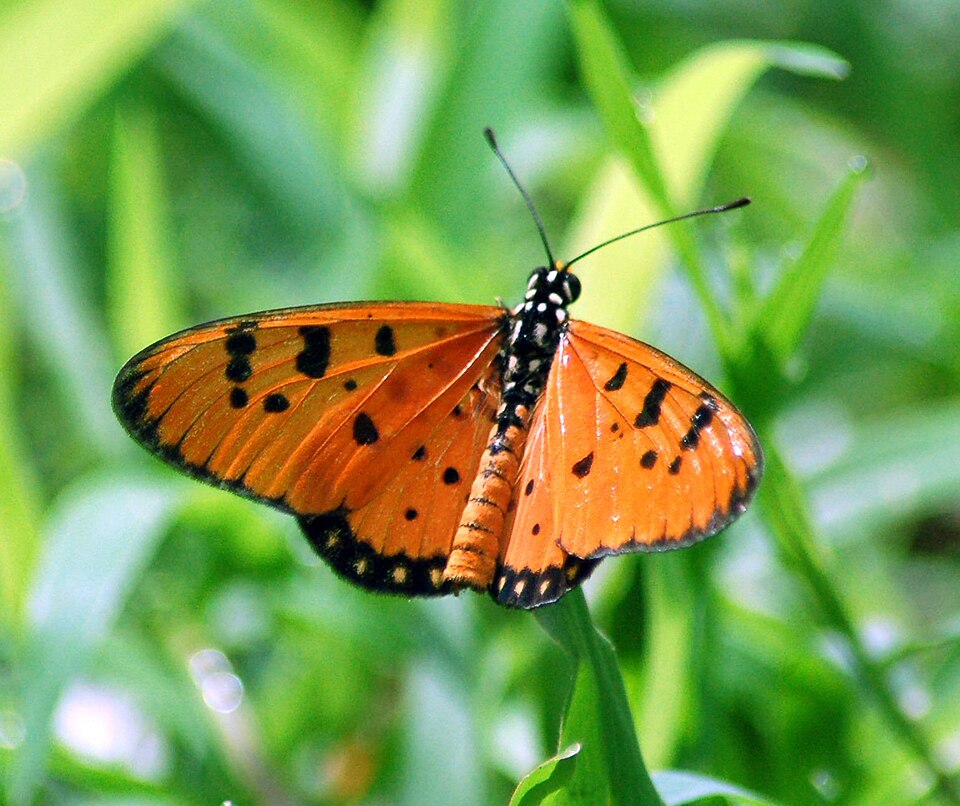
Take the tawny coster, a butterfly native to India and Sri Lanka. Between 2012 and 2019, it spread across Australia at about 84 miles a year — roughly a two-hour drive on the freeway, covered by an insect with a wingspan smaller than your palm.
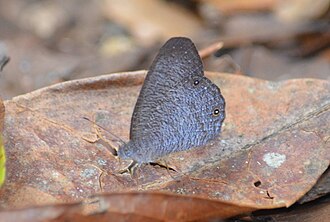
Then there’s the small blue, a tiny butterfly found in the United Kingdom. Over the past 150 years it has lost about 40% of its habitat there. It isn’t finding lots of new places to live; it’s simply disappearing from the old ones.
And butterflies don’t always move in the direction we’d expect. In Mexico, between 1988 and 2011, painted lady butterflies climbed uphill about 272 feet a year — the height of a 25-story building, every single year. Queen butterflies, meanwhile, moved downhill about 105 feet a year, roughly a 10-story building.
Same country. Same years. Opposite directions.
In Brazil, a butterfly called Godartiana byses spread out of Rio de Janeiro and Bahia into São Paulo as the region warmed, essentially following the weather it liked into a new state. Numbers tell us part of the story. Individual butterflies make it much easier to picture what’s happening.
Tropical Butterflies May Face the Biggest Challenge
Scientists are especially worried about butterflies in the tropics. Many tropical species already live close to the hottest temperatures they can handle, so even a little more warming could push part of their habitat past the limit.
And there’s a second problem: they need somewhere to go.
Forests are cleared. Wetlands are drained. Farms, roads, and cities break wild areas into smaller and smaller pieces. Imagine your neighborhood becoming unbearably hot, so you need to move somewhere cooler — but every road out is blocked. That’s the situation a lot of wildlife is in.
Mountain butterflies have it even tougher. About two-thirds of butterfly species live mainly in mountain regions, and as temperatures rise, some climb higher to stay cool.
But eventually, they run out of mountain.
Scientists say these species are being squeezed toward the summits, where there’s nowhere left to go. And we know the least about butterflies in places like Central Africa, Southeast Asia, New Guinea, and the Amazon — some of the most wildlife-rich corners of the planet.
Why We Know So Much About Europe’s Butterflies
In countries including the Czech Republic, Sweden, Finland, Luxembourg, and Spain, scientists have recorded changes in where at least half of their butterfly species live.
Does that mean Europe’s butterflies are moving more than butterflies everywhere else?
Not necessarily.
Europe has been keeping close track of butterflies for decades. Volunteers walk the same routes year after year, recording which species they see. So when butterflies move into new areas — or disappear from old ones — someone is much more likely to notice.
In many tropical regions, that kind of long-term monitoring simply doesn’t exist.
So it may not be that Europe’s butterflies are moving more. We may just know more about what they’re doing.
And that’s an important difference.
It’s Not Just Climate Change
Warming was the most common reason scientists found for butterflies moving into new places. But it wasn’t the only thing reshaping their ranges.
When butterflies expanded, rising temperatures were usually the main driver. When they disappeared from where they used to live, farming and other human activities often played the bigger role.
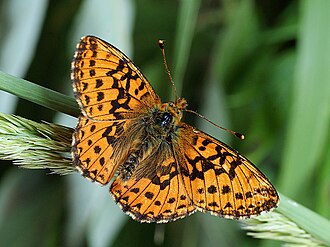
Take the cranberry fritillary. This butterfly lost much of its German habitat after people drained the peat bogs where it lived. Temperature wasn’t the main problem — its home simply disappeared.
The causes vary by region, too. In South America, human disturbance is a major factor. In Oceania (I had to look this one up, too!), invasive species and development top the list. That means there’s no single fix: protecting butterflies takes cutting fossil fuel pollution and protecting the habitat they need.
Why Butterflies Matter
Climate change was the most common reason scientists found for butterflies moving into new areas. But it wasn’t the only reason their ranges changed.
When butterflies expanded into new places, warming temperatures were usually the main driver.
When they disappeared from places where they once lived, farming and other human activities often played a bigger role.
Take the cranberry fritillary. This butterfly lost much of its habitat in Germany after people drained the peat bogs where it lived. Temperature wasn’t the main problem. Its home simply disappeared.
The causes also vary around the world. In South America, human disturbance plays a major role. In Oceania, invasive species and development are important threats.
That means there isn’t one simple solution. Protecting butterflies requires tackling climate change and protecting the habitats they need to survive.
Why Butterflies Matter
Butterflies aren’t just beautiful. Because they respond quickly to changes in temperature and habitat, scientists use them as an early warning system, and watching where they appear and where they vanish helps us understand how whole ecosystems are shifting.
They’re a little like the canary in the coal mine, except the “coal mine” is our changing planet.
There’s another problem we don’t talk about enough. Most parks and wildlife preserves were drawn to protect animals where they lived at the time. But climate change is moving the animals, and a protected area can’t pack up and follow a butterfly.
Researchers estimate that about 76% of insect species aren’t adequately protected by the preserves we have today. For butterflies that are on the move, that number climbs to about 85%.
We drew lines on maps around wildlife. Now the wildlife is moving past those lines.
You Can Help!
Here’s the encouraging part: this is one of those problems where regular people can genuinely help scientists.
See a butterfly? Take a picture. You can upload your photos to citizen-science apps like iNaturalist, where researchers use them to figure out which butterflies are showing up, where, and when. And it isn’t busywork. Remember the tawny coster racing across Australia? Researchers found that combining everyday people’s photos with official records gave them a far better picture of how fast it was spreading. People with smartphones filled gaps that professional scientists couldn’t cover on their own.
A few more things that make a difference:
Keep working on the root cause. Every ton of fossil fuel pollution we keep out of the air is a little less pressure on species that are already running out of room.
Plant native flowers and host plants in your yard or on your balcony, and skip the pesticides. Butterflies need food and a safe place to lay eggs at every stop along the way.
Push for wildlife corridors — connected strips of habitat that let species move instead of getting stranded. Your city or county’s open-space plan is a good place to speak up.
Ask your representatives to fund long-term monitoring, here and overseas. We can’t protect what nobody is counting.
Wildlife doesn’t stay put.
The Big Takeaway
Butterflies are already responding to a changing planet.
Some are moving into new territory. Others are disappearing from places where they once thrived. And some are doing both at the same time.
But we’re still seeing only part of the picture because huge areas of the world aren’t being closely monitored.
That’s what makes something as simple as spotting a butterfly in your backyard more important than it might seem.
One butterfly fluttering past your flowers Butterflies are already responding to a changing planet. Some are moving into new territory, some are disappearing from places they once thrived, and some are doing both at once.
But we’re still seeing only part of the picture, because huge stretches of the world aren’t being watched at all.
That’s what makes something as small as spotting a butterfly in your backyard more important than it looks. One butterfly drifting past your flowers isn’t evidence of a changing world. Put millions of those sightings together, though, and they tell a very big story.
The natural world is already on the move. It’s up to us to pay attention to where it’s going — and to make sure there’s still somewhere for it to go. Our kids and grandkids are counting on us.
Love wildlife? You might like our Endangered Species stories!
But put millions of those observations together, and they tell a much bigger story.
The natural world is already on the move. We just need to pay attention to where it’s going — and make sure there’s still somewhere for it to go.