The Biggest Climate Culprit Isn’t What Vegans Think
By Holly Shaftel, contributing writer
After 12 years in climate science communications, I paused my career to become an animal rights activist, targeting animal agriculture. I had spent years exposing false information about climate change. So, I thought the people in my new community would understand the science. I was wrong.
Many animal rights activists think that raising animals for food causes more climate change than burning fossil fuels. But when I traced that claim, the same sources emerged:
• Misleading “documentaries” — essentially propaganda — such as Cowspiracy
• Well-meaning platforms such as Unchained TV that get the science wrong
• Individuals such as Dr. Sailesh Rao, a climate activist who makes big claims without evidence
• A tendency to trust information without question, as long as it comes from a fellow vegan
I say this as a vegan who wants to end factory farming. Keep reading to find out why fossil fuels are the main driver of climate change — and why animal agriculture still matters.
First, Let’s Talk About Carbon
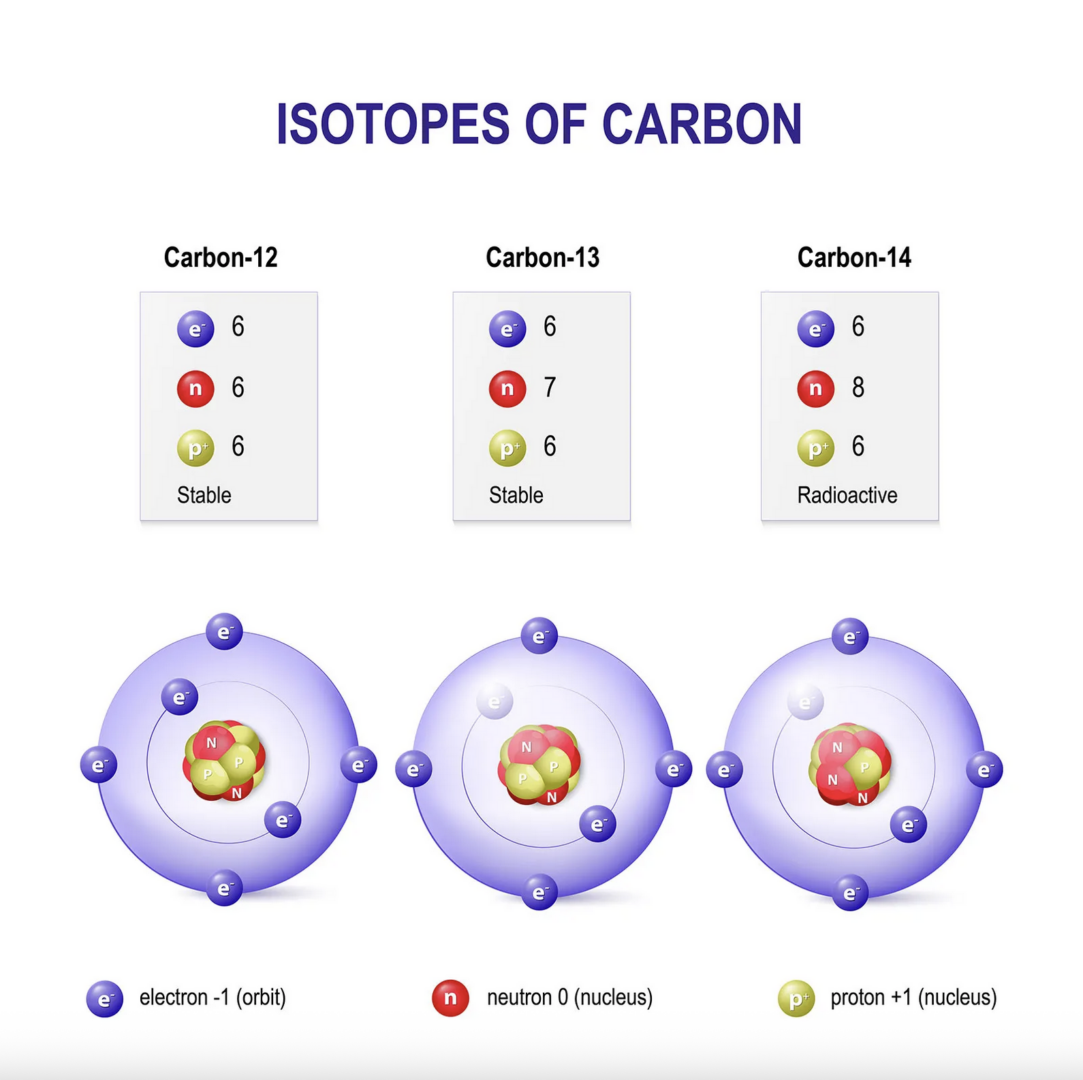
Carbon is an element that comes in different versions called isotopes. They are chemically the same, but slightly different in weight. The three natural forms are Carbon-12 (the most common), Carbon-13 (rare), and Carbon-14 (extremely rare and radioactive*).
Every living being absorbs all three from the air. However, when something (or someone) dies — or when a tree ring stops growing — it stops absorbing carbon. Carbon-12 and Carbon-13 stay put, but Carbon-14 slowly fades away. The less Carbon-14 something has, the older it is. This is the basis of a process called radiocarbon dating.
A Brief History of Climate Science
Now that you know what isotopes are, here’s how scientists used them to solve the mystery.
Early 1800s — Scientists discover the atmosphere traps heat
In 1824, French mathematician Joseph Fourier wondered why Earth was warm enough to support life. He concluded the atmosphere traps heat like a greenhouse — but didn’t know which gases were responsible. [1] In 1856, American scientist Eunice Foote filled glass jars with different gases and held them in sunlight. She found CO₂ heated up more than regular air and stayed warm longer — the first proof that CO₂ traps heat. People ignored her work because she was a woman. [2] Irish physicist John Tyndall repeated her experiments in 1859 and got the credit.
1896 — Arrhenius calculates that fossil fuels could warm the planet
Swedish chemist Svante Arrhenius spent a year doing calculations by hand. He found that doubling CO₂ in the atmosphere would raise Earth’s average temperature by roughly 3.5°C (about 6°F).** [3] He knew that burning coal produces CO₂, but he couldn’t prove the CO₂ building up in the atmosphere was coming from fossil fuels rather than natural sources such as volcanoes or the ocean. He also thought it would take thousands of years to matter, so he wasn’t worried.
1938 — Callendar shows warming is already happening
British engineer Guy Callendar gathered temperature records from 147 weather stations around the world. He found Earth had already warmed about 0.3°C (0.54°F) since the late 1800s — right when coal burning took off. He also showed CO₂ levels had risen over the same period. [4] It was a strong clue, but still not proof that fossil fuels were the cause.
Late 1940s — Scientists develop the tools to trace carbon
American chemist Willard Libby invented radiocarbon dating — a way to figure out how old something is by measuring its remaining Carbon-14. He invented it for archaeology. But it gave climate scientists something they didn’t yet know they needed: a way to measure carbon isotopes in the atmosphere.
1955 — Suess discovers the fossil fuel fingerprint
Austrian-American chemist Hans Suess was testing Libby’s technique on wood samples when he noticed something odd: Wood grown after 1850 had less Carbon-14 than it should. It wasn’t because the wood was old, but because the air it absorbed carbon from had less Carbon-14 in it than normal. [5]
He traced it to fossil fuels. Coal and oil are so ancient that all their Carbon-14 has long since decayed away. When burned, they release mostly Carbon-12 and some Carbon-13, which bond with oxygen to form CO₂. This Carbon-14-free CO₂ was diluting the atmosphere — like pouring plain water into a glass of juice. Trees recorded this in their rings, and Suess read it. For the first time, scientists had a chemical fingerprint proving fossil fuel carbon was building up in the atmosphere. [6]
1958 — Keeling measures CO₂ rising in real time
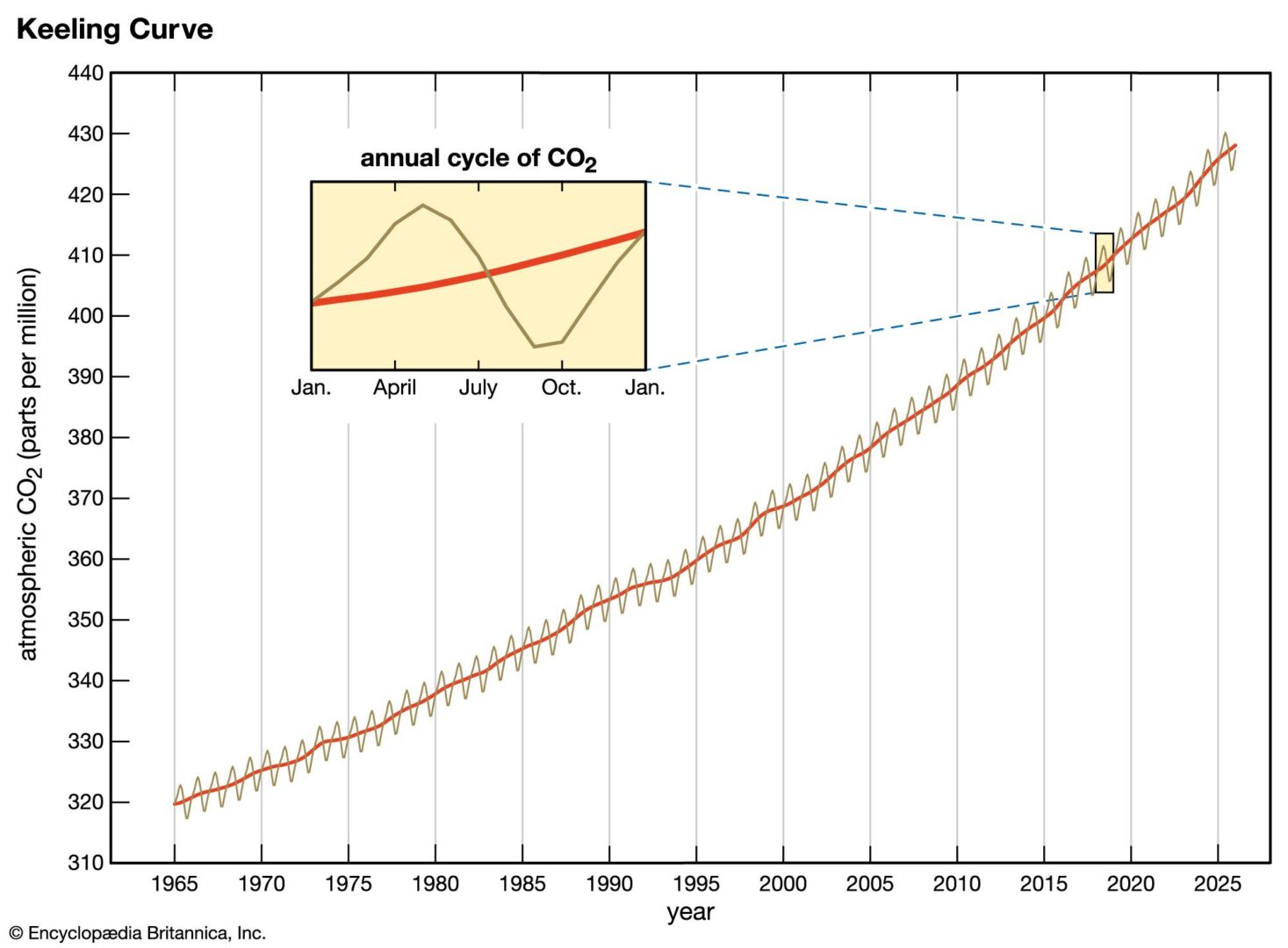
American geochemist Charles Keeling set up a monitoring station on Mauna Loa, a remote volcano in Hawaii. He made the first precise, ongoing measurements of CO₂ in the atmosphere. [7] Within two years, the trend was clear: CO₂ was rising every year, and Carbon-14 levels were falling in step — exactly what fossil fuel burning would produce. His graph became one of the most important in science. It’s now called the Keeling Curve. [8]
1979 — A second isotope fingerprint locks in the case
Keeling also tracked Carbon-13. Fossil fuels formed from ancient plants and animals, and plants tend to absorb lighter carbon. So fossil fuel CO₂ is low in Carbon-13. Keeling found the atmosphere’s Carbon-13 levels were steadily falling in a way that matched fossil fuel emissions. [9] Now there were two isotope fingerprints pointing to the same source. Volcanoes and the ocean don’t produce this pattern.
1985 — Ice cores extend the record back 150,000 years
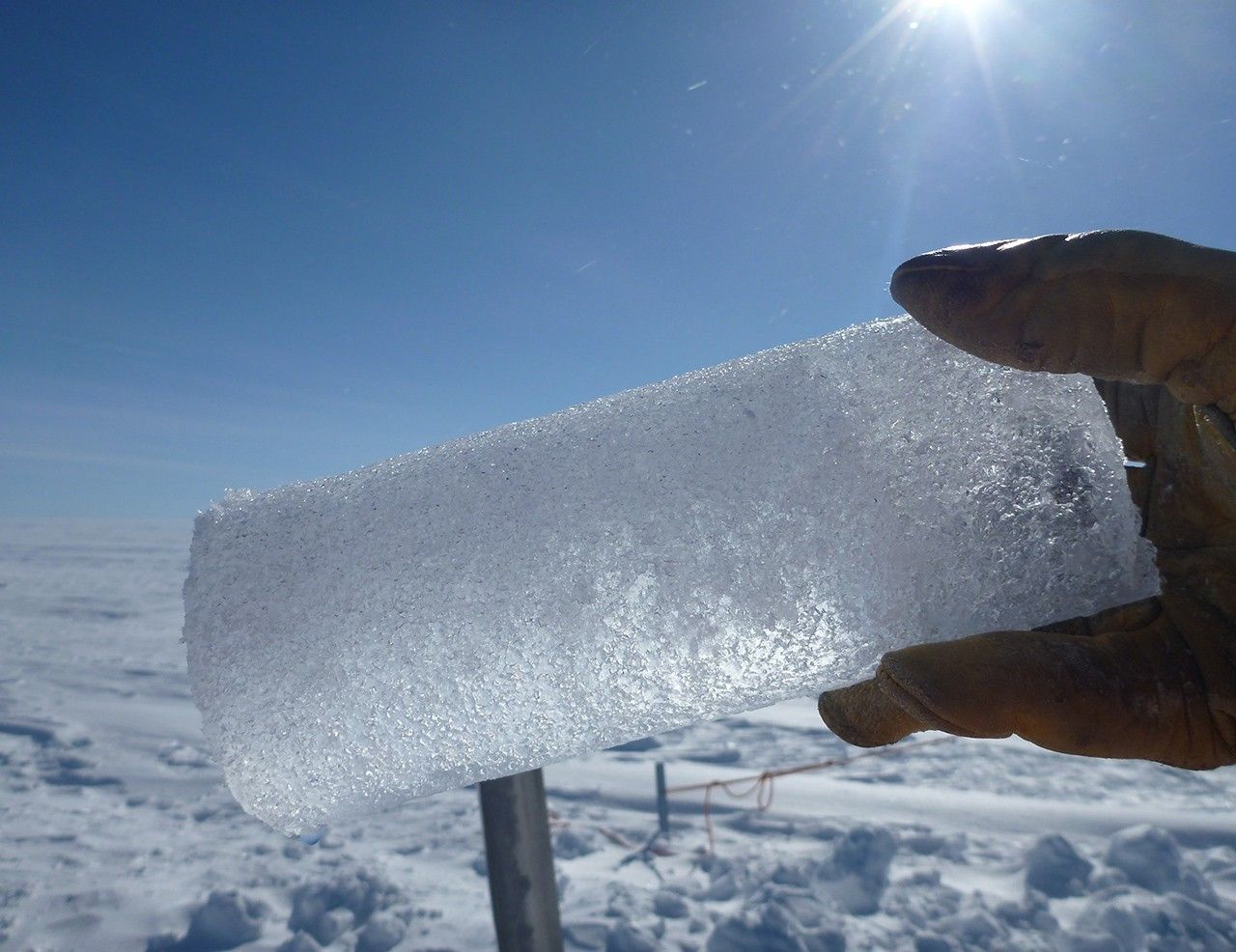
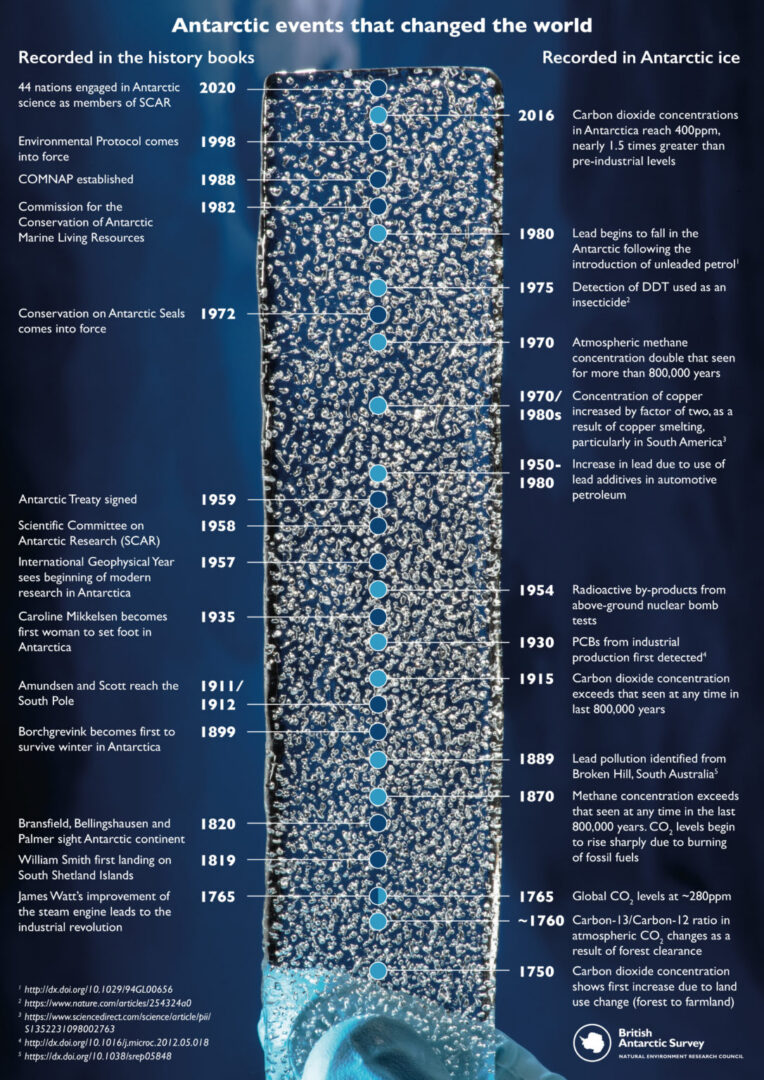
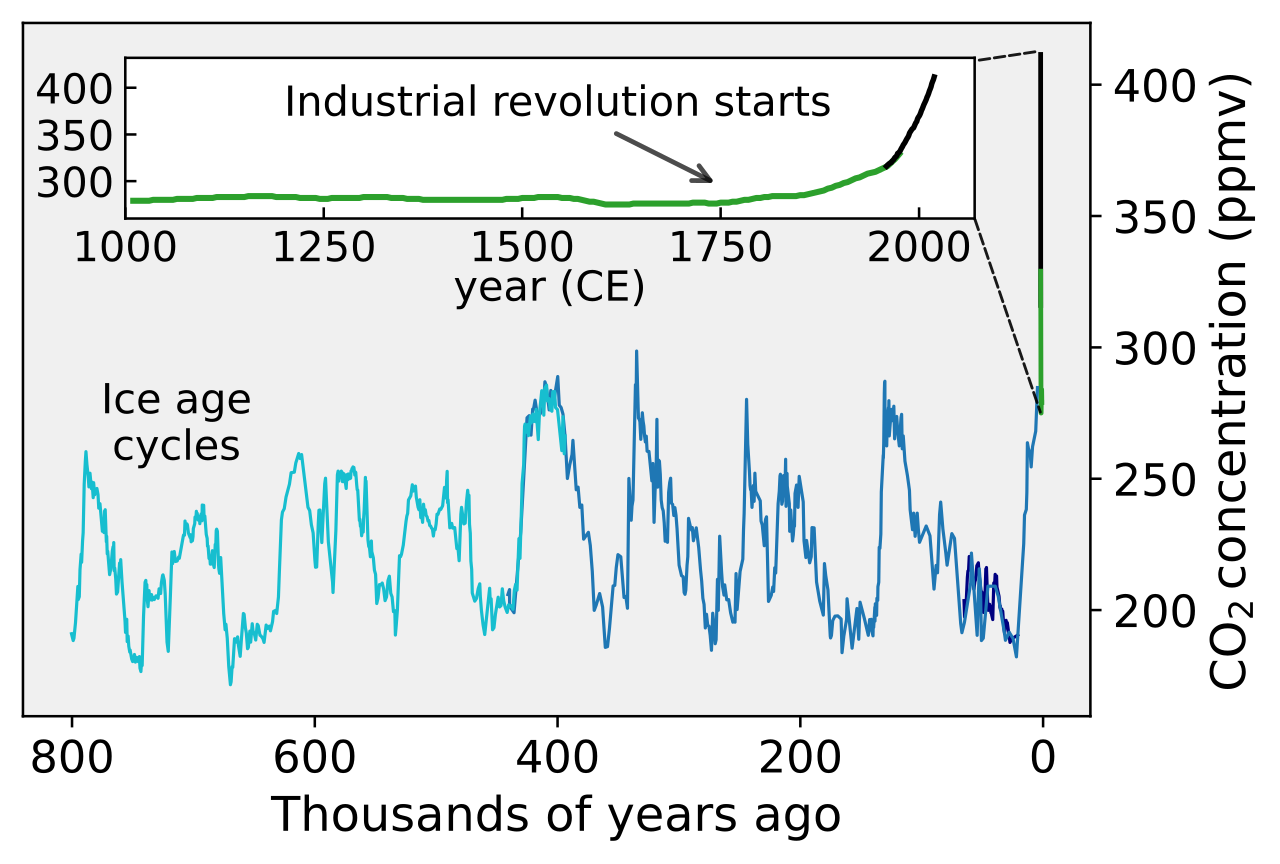
Scientists drilling in Antarctica extracted ice cores — long cylinders of ice containing tiny trapped air bubbles. Those bubbles are actual samples of ancient atmosphere. They showed CO₂ had hovered around 280 parts per million during warm periods over the past 400,000 years.[10] By 1985, it was already at 345 parts per million and climbing. Later cores pushed the record back to 800,000 years with the same result. [11] The isotopic fingerprints in today’s atmosphere matched fossil fuels — not any natural source. And the evidence has only grown stronger since.
Where Does Animal Agriculture Fit In?
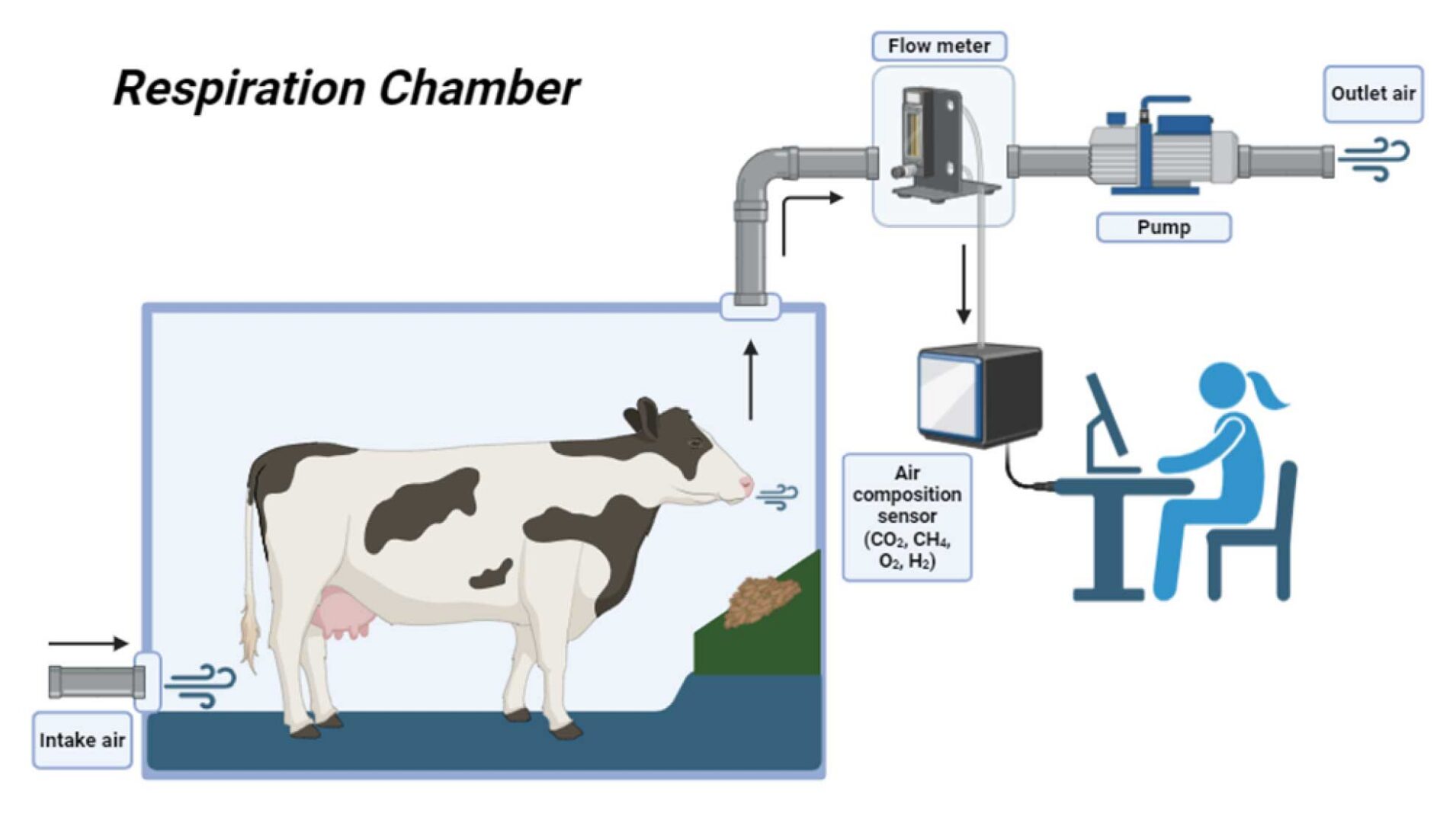
Scientists have known since the 1800s that microbes in a cow’s stomach produce methane as a byproduct of breaking down food — and that cows burp it out. But no one had measured how much methane all the world’s livestock were releasing. In the 1970s, researchers began measuring this using airtight rooms called respiration chambers.
In 2006, the United Nations’ Food and Agriculture Organization (FAO) published a landmark report called Livestock’s Long Shadow. It found that livestock were responsible for roughly 18% of all human-caused greenhouse gas emissions — more than all global transportation combined. The report made headlines and put animal agriculture on the climate agenda for the first time.
But the comparison to transportation was flawed. The FAO counted livestock’s full lifecycle emissions — clearing forests, growing feed, managing manure, and the gases animals produce. But it only counted transportation’s direct emissions, not its full lifecycle. The FAO acknowledged this mistake.
The meat and dairy industry moved quickly to challenge the report, funding researchers to dispute the numbers and lobbying governments to push back — just like fossil fuel companies had done for decades. In 2013, the FAO revised its estimate to 14.5%, putting livestock roughly on par with global transportation. More recent studies put the figure between 12% and 20%, depending on what’s included. [12]
A Methane Surprise
The same isotope fingerprinting used to trace fossil fuels is now being used to track methane from animal agriculture. Methane from livestock has its own Carbon-13 signature — different from methane produced by oil and gas. Scientists at NOAA measure these ratios continually, and satellites, aircraft, and drones add large-scale readings on top. [13][14]
This tool recently produced a surprising finding. Between 2020 and 2022, methane in the atmosphere surged at a record rate. By analyzing the Carbon-13 signature, researchers found the surge came mainly from biological sources — wetlands, waste, and agriculture — not fossil fuels. [15] It was a major discovery made entirely by reading isotopes in the air.
Tracking methane is harder than tracking CO₂ — it comes from so many sources that separating them is genuinely difficult. But the science is getting better every year.
Conclusion
The carbon warming our planet is ancient carbon — low in Carbon-13, empty of Carbon-14. It could only come from something buried for hundreds of millions of years and recently burned. That’s not a guess. It’s written in the atmosphere, in tree rings, ice cores, layers of mud at the bottom of lakes, and more.
Animal agriculture is a significant contributor too, accounting for roughly 12–20% of global emissions. Its methane doesn’t last as long as CO₂, but it traps heat much more powerfully in the short term. Every fraction of a degree of warming we can avoid matters.
Fossil fuels built the cliff. Animal agriculture is making it steeper. To address climate change, we need to transform both the energy systems that power our world and the food systems that feed it.
Sources
[1] JSTOR Daily: How 19th-Century Scientists Predicted Global Warming
[2] NOAA Climate.gov: Eunice Foote, Hidden Climate Science Pioneer
[3] On the Influence of Carbonic Acid in the Air upon the Temperature of the Ground
[4] Nautilus: The Part-Time Climate Scientist (Callendar)
[5] Science: Radiocarbon Concentration in Modern Wood
[7] NOAA: American Chemical Society Honors the Keeling Curve
[8] Scripps Institution of Oceanography: The History of the Keeling Curve
[9] Nature: Recent trends in the 13C/12C ratio of atmospheric carbon dioxide
[10] NASA Graph of Atmospheric Carbon Dioxide Rise
[11] CO2.earth: Ice Core Data (Luthi et al. 2008, 800,000-year record)
[12] The Breakthrough Institute: Livestock Don’t Contribute 14.5% of Global Greenhouse Gas Emissions
[13] NOAA Global Monitoring Laboratory: Trends in CO2
* When something is radioactive, it’s unstable and gives off radiation.
** A 3.5°C (6°F) rise might not sound like much. But small changes in Earth’s average temperature can have huge consequences — just like a fever. Our normal body temperature is around 98.6°F (37°C). Anything above 100.4°F (38°C) is a fever. It doesn’t take much to throw a complex system off balance.
Main image by franzl34! at Pixabay