
The Simplest Way to Add Solar to Your Home
By Holly Shaftel, contributing writer
I’ve been a proud of solar panels since 2021. They significantly decreased my electricity bills to $11 per month, and it feels good to do my small part to help combat climate change.
Then one day our bills started climbing again. I began wondering if something fishy was happening behind the scenes and to consider getting more solar. Unfortunately, it’s not in the cards for me financially.
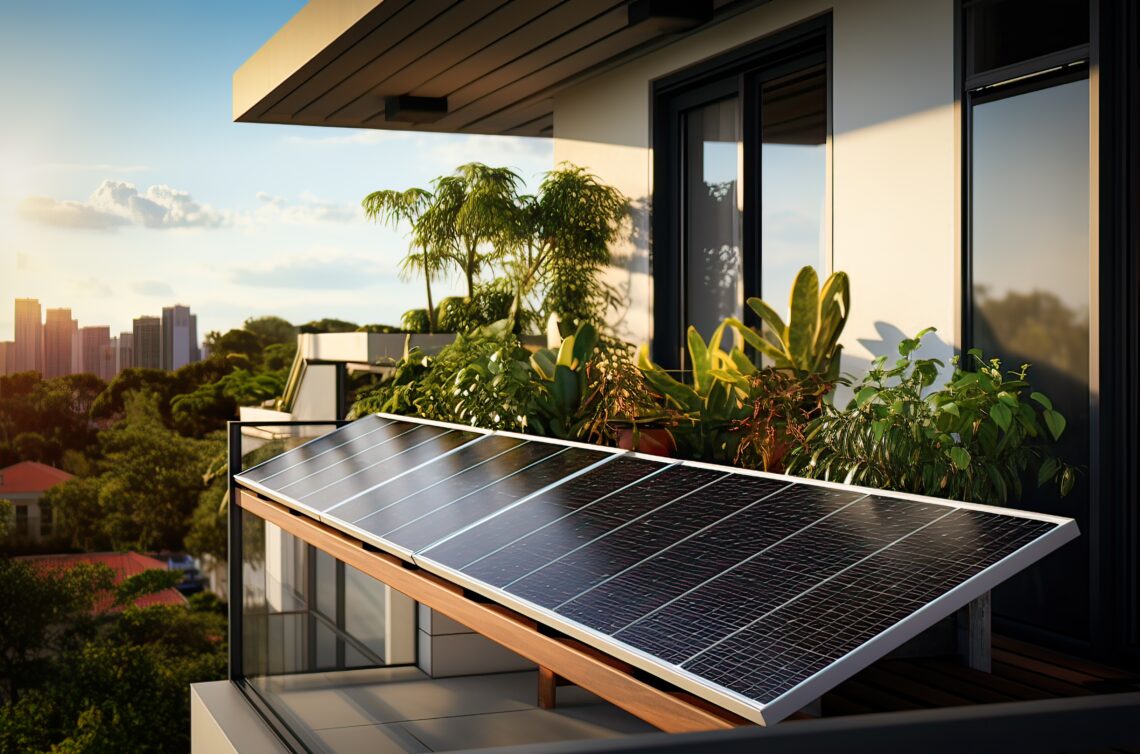
Next thing I know, “plug-in solar” — also called “plug-and-play” and “balcony solar” — came on my radar. Already common in several European countries, particularly Germany, and legal in Utah, this option works for people who rent, who can’t afford it, or who dislike “red tape” (rules and procedures that seem unnecessary and can cause delays)!
It’s no wonder many US states are considering legalizing this more portable version. Let’s learn how it works and why it’s advantageous.
How Plug-In Solar Works
As the name suggests, you literally plug your solar panel — which is usually about the size of a large door — to a typical wall outlet.
The solar panel turns energy from the sun into DC, or “direct current,” power. A device attached to the panel, called a “microinverter,” turns that power into AC, or “alternating current,” for your home.
The plug feeds that power into the wall outlet and goes to your appliances first. Whatever power isn’t used goes to the electrical grid — an interconnected network of power lines — for other people to use.
Plug-In Solar Advantages
You know I like my tables, so here are some benefits to getting this kind of power:
| Benefit | Explanation |
| Easy installation | Just plug it in to a standard outlet — no complex electrical work needed! |
| Lower upfront cost | The panel’s size and easy installation lower the initial cost. |
| Portable | Need to move it? You can easily do it! |
| Faster setup | Get it up and running in minutes to hours rather than days. |
| More accessible | It’s ideal for renters where permanent rooftop solar isn’t allowed. |
| Scalable | Not ready for rooftop solar? Start small (with one panel) and add on over time. |
| Immediate energy savings | Under the right conditions, you can lower your electricity bills. |
| Minimal permitting | Just purchase and plug it in! |
| Good for small spaces | That’s why it’s sometimes called “balcony solar.” |
| Lower maintenance | It’s easy to clean, inspect, and monitor. |
Conclusion
Whether you’re a renter, a DIYer, or need to supplement your current solar system, plug-in solar can be a pragmatic solution to your energy woes.
Unfortunately, electric utilities have been pushing back on its spread, citing issues that have arguably been addressed. Tell your state representative that you’re in favor of legalizing it, and learn more about this technology here.
Main image by Franz Bachinger from Pixabay