

The AMOC Slowdown: A Warning Sign From the Atlantic
What Is the AMOC?
Picture a giant conveyor belt — like the ones at a grocery store checkout — but instead of groceries, it’s moving billions of gallons of ocean water all around the planet. That’s basically what the Atlantic Meridional Overturning Circulation, or AMOC (say it like “AY-mock”), does.
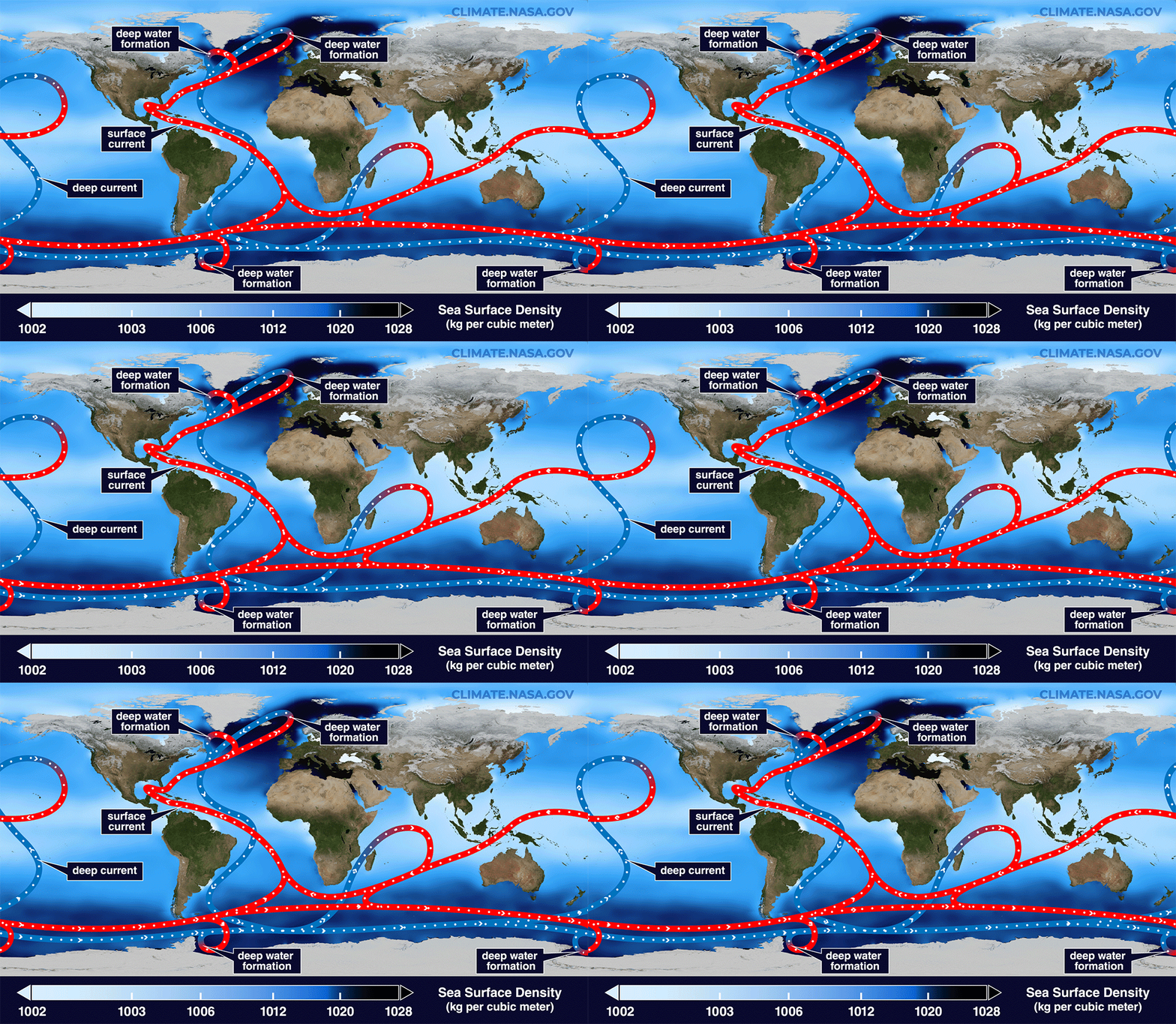
Here’s how it works: Warm, salty water near the tropics flows north along the surface of the Atlantic Ocean, carrying heat with it toward Europe. When this warm water reaches the cold waters near Greenland, it cools down and gets heavier. Heavy water sinks to the ocean floor, then flows back south as a deep, cold current. Eventually, that cold water warms up again somewhere in the Pacific or Southern Ocean, rises back to the surface, and the whole loop starts over.
The entire trip takes about 1,000 years — but the effects are happening all the time, every single day.
Scientists sometimes call this bigger system the “global ocean conveyor belt.” AMOC is one of the most important parts of it, and it acts like one of Earth’s biggest thermostats.
Why Should We Care About the AMOC?
You might be thinking — so what? Water moves around the ocean. Big deal. But AMOC actually affects life on land in some pretty major ways:
It keeps Europe warmer than it should be. AMOC carries an incredible amount of heat northward — about as much energy as a million power plants combined. Because of this, Western Europe is way warmer than you’d expect. London, England is at the same latitude (distance from the equator) as Calgary, Canada. Paris, France lines up with Quebec City, Canada. But London and Paris are much warmer in winter. Without AMOC pumping heat northward, parts of Europe could be several degrees colder.
It helps control rainfall around the world. AMOC affects where rain falls across the tropics, including the monsoon rains that farmers in Africa and South America depend on to grow food. If AMOC changes, those rainfall patterns can shift — causing droughts in places that need rain to survive.
It helps the ocean absorb carbon dioxide. When warm water cools and sinks near Greenland, it carries dissolved CO₂ down to the deep ocean. This keeps some of that greenhouse gas out of the atmosphere. A weaker AMOC means less carbon gets stored in the ocean — and more stays in the air, speeding up climate change.
It affects sea level on the U.S. East Coast. This one surprises a lot of people. AMOC actually pulls water away from the East Coast of the United States. If it weakens, that pulling effect decreases, and sea levels in cities like New York, Boston, and Miami rise even faster.
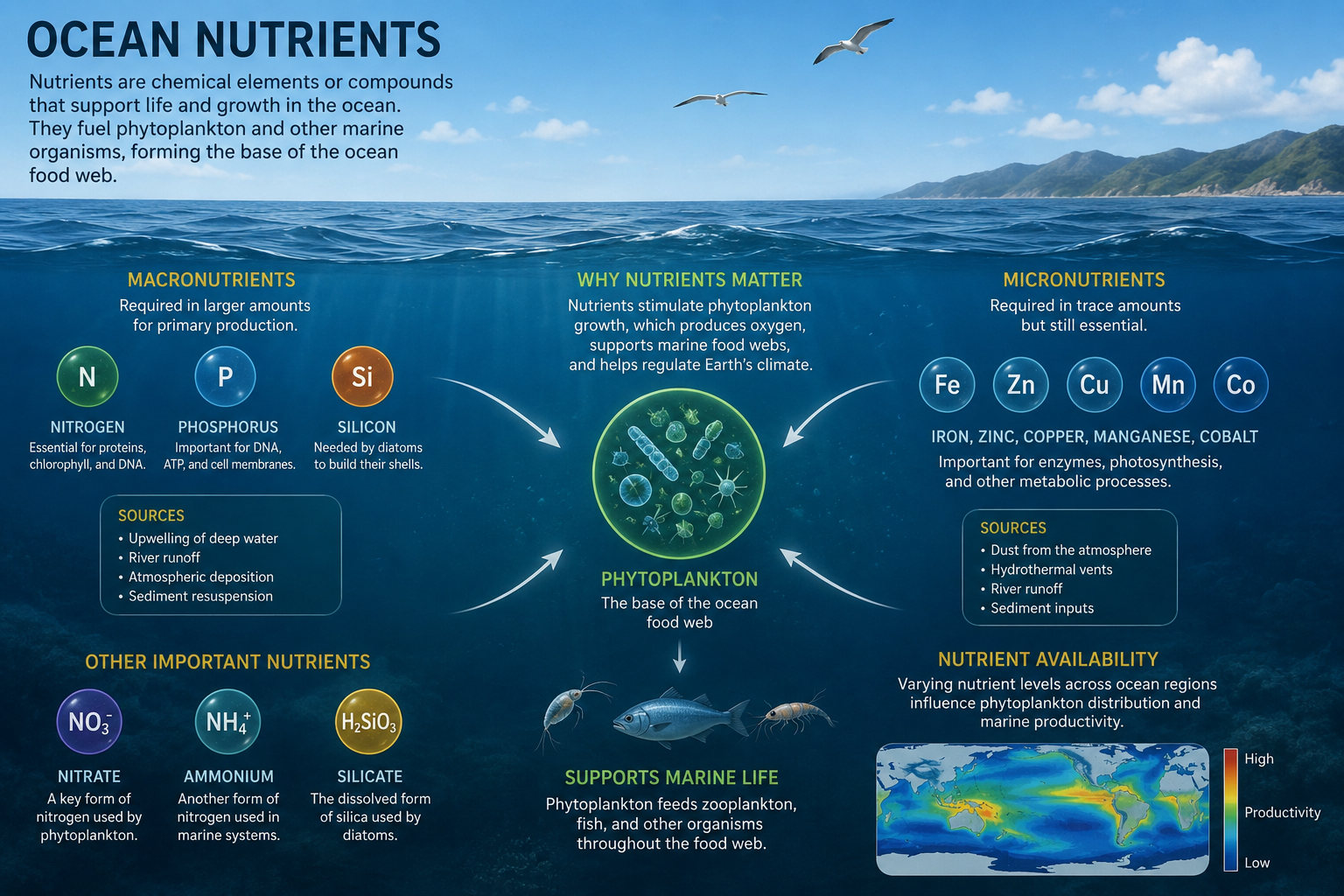
It feeds ocean life. Deep ocean water is full of nutrients. When AMOC helps bring that water to the surface, it feeds tiny organisms that fish eat — basically fueling the entire food chain in parts of the North Atlantic. Without it, some of the world’s most important fisheries could collapse.
Is AMOC Actually Slowing Down?
Yes — and scientists have been watching it closely.
Scientists started directly measuring AMOC in 2004 using underwater sensors stretched across the Atlantic Ocean. What they found confirmed something climate models had already predicted: AMOC is weaker than it’s been in a very long time.
By studying ancient ocean sediments and ice cores (basically nature’s old record books), researchers were able to look even further back in time. A major study published in 2021 found that AMOC is now at its weakest point in at least 1,000 years.
So what’s causing it to slow down? The main culprit is climate change.
Remember how AMOC works? It depends on salty, dense water sinking near Greenland. But as global temperatures rise, Greenland’s massive ice sheet is melting and pouring enormous amounts of fresh water into the ocean. Fresh water is lighter than salt water, so it doesn’t sink as easily — and that throws off the whole system, like throwing a wrench into the gears of a machine.
More rainfall over the North Atlantic (also a result of a warming climate) adds even more fresh water, making the problem worse.
What Would Happen If AMOC Collapsed?
There’s a difference between AMOC slowing down a little and AMOC basically stopping. Scientists worry a lot about the second scenario.
AMOC works kind of like a light switch — it can be “on” (strong) or “off” (very weak), and it can flip between those two states faster than you might expect. Earth’s history shows this has actually happened before.
About 12,000 years ago, a massive amount of glacial meltwater flooded into the North Atlantic and caused AMOC to dramatically slow down. Temperatures in Greenland dropped by as much as 15°C in just a few decades. Droughts hit regions that normally got rain. Sea ice spread further than usual. Entire ecosystems changed.
If something like that happened today, scientists project we could see:
- Much colder winters in Northwestern Europe — potentially 5–10°C colder in some areas, even while the rest of the world warms up
- Worse droughts in parts of Africa and South Asia, threatening food and water supplies for billions of people
- Faster sea-level rise along the U.S. East Coast — possibly an extra foot of rise or more
- Collapse of major fisheries in the North Atlantic, affecting food supplies and millions of jobs
- More CO₂ in the atmosphere, which would speed up global warming even further
Scientists aren’t sure exactly when or if a major collapse could happen. Some studies suggest it could happen within this century if greenhouse gas emissions stay high. Others think it’s further off. But most agree: the risk is real, and the consequences would be very hard — if not impossible — to reverse.
What Can We Do About It?
Here’s the good news: AMOC’s future isn’t decided yet.
The main reason AMOC is slowing down is all that fresh meltwater from Greenland. And the reason Greenland is melting faster and faster is because of rising global temperatures caused by greenhouse gas emissions — from burning fossil fuels like oil, gas, and coal.
That means the biggest thing we can do to protect AMOC is also the biggest thing we can do about climate change in general: reduce the amount of carbon dioxide and other greenhouse gases we release into the atmosphere.
Climate models show that if we keep warming below about 1.5–2°C, AMOC weakens much less than if temperatures rise further. Every fraction of a degree matters.
Scientists are also working to build better monitoring systems so we can track AMOC more closely, catch any major changes early, and give governments time to prepare.
The Bottom Line
AMOC might sound like a science textbook term, but it’s one of the most important systems keeping life on Earth comfortable — and it’s being disrupted by human activity.
The ocean isn’t just a big puddle. It’s an active, moving, interconnected system that regulates temperature, rainfall, sea levels, and ecosystems across the entire planet. When we change the climate, we change the ocean — and when we change the ocean, we change everything.
Understanding AMOC is one small step toward understanding just how connected our world really is, and why taking care of it matters for everyone — including us.
Don’t miss our other blogs on climate and understanding science!