

The Year Nature Couldn’t Keep Up
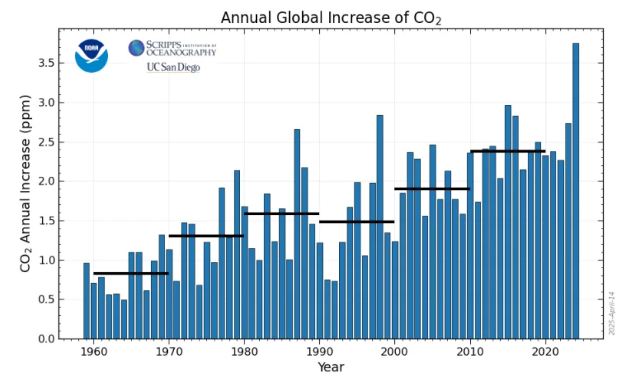
In 2024, scientists saw the biggest jump in carbon dioxide (CO₂) levels in Earth’s air since they started keeping track back in 1958. CO₂ went up by 3.58 parts per million compared to 2023, beating the old record from 2016. Nature couldn’t keep up.
Most of this rise came from burning fossil fuels like coal, oil, and gas. On top of that, natural events like El Niño and massive wildfires in North and South America made things worse.
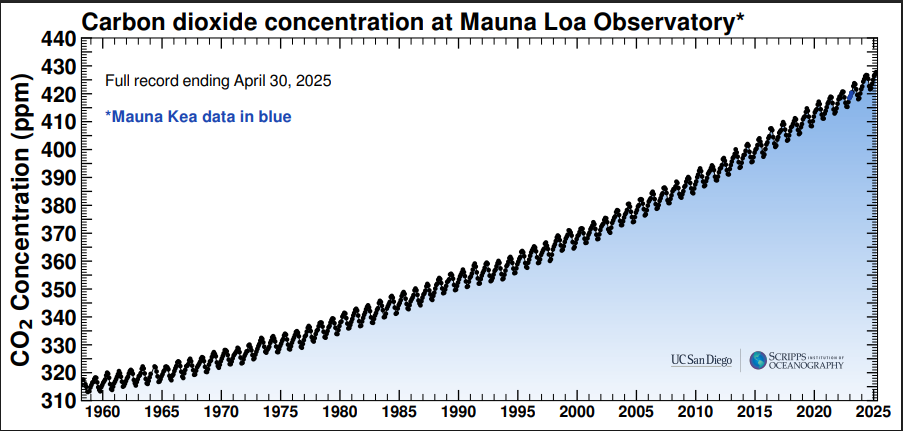
We know all this from something called the Keeling Curve—a graph that shows how CO₂ levels have changed over time. It’s named after Charles David Keeling, the scientist who started measuring CO₂ at Mauna Loa in Hawaii in 1958. The graph shows ups and downs during the year, but the big picture is clear: CO₂ is rising fast.
Why Couldn’t Nature Keep Up?
In 2023, forests, plants, and soil—our planet’s natural “carbon sponges”—barely soaked up any CO₂. Usually, they absorb about half of the CO₂ that humans release, helping slow down climate change. But because of extreme heat, droughts, and fires, they couldn’t do their job. In fact, places like the Amazon rainforest actually gave off more CO₂ than they absorbed.
This is a big problem. If nature can’t keep up, it’ll be even harder to stop climate change. Scientists say we can’t just count on forests and plants to save us—we need to act ourselves. That means using cleaner energy, cutting back on pollution, and protecting our forests.
Why Does It Matter?
Because more CO₂ means more heat trapped in the atmosphere. That leads to hotter temperatures and more extreme weather—like heatwaves, wildfires, floods, and droughts. The new data is a warning: we need to cut down on fossil fuels now to protect our planet’s future.
Stay up to date here with the latest climate news and information!


You May Also Like

Blue Whales Are Going Quiet — and That’s a Big Warning

Ocean In Trouble: Toxic Algae Is Killing Sea Life