
Truth or Trickery? How to Tell Science from Propaganda
I spend way too much time on social media platforms. I often come across various forms of propaganda and disinformation, especially about climate change and renewable. Bots create some of these posts. Bad actors funded by billionaires and dirty energy produce others, and some come from people who genuinely can’t distinguish between science and propaganda.
The Early Days of Propaganda in America
Even though the word propaganda became popular in the United States around World War I, the idea behind it is much older. One of the first groups to use it were the ancient Greeks. They didn’t have printed ads or movies like we do today, but they still shared ideas in powerful ways. They used art, plays, public meetings, courtrooms, games, and religious festivals to influence how people thought and what they believed.
During World War I, President Woodrow Wilson created a government group called the Committee on Public Information to convince Americans to support the war. This group used posters, movies, speeches, and news stories to spread positive messages about the U.S. and negative ones about the enemy. Some information was exaggerated or misleading, which helped stir up strong feelings like patriotism—and sometimes fear and anger toward Germans. This was one of the first large-scale uses of modern propaganda in the United States. It worked so well that propaganda didn’t go away—it just evolved.
Modern-Day Propaganda
If you’re old enough (hopefully most of you aren’t!), you might remember ads from the tobacco industry. For years—and with a lot of money—they tried to convince people that smoking didn’t cause cancer and that nicotine wasn’t addictive. Yes, really. One company, R.J. Reynolds, even ran 51 different ads claiming that “more doctors smoke Camels than any other cigarette.”
And it didn’t stop there. Similar campaigns were used to downplay problems like acid rain, DDT, and damage to the ozone layer. More recently, the fossil fuel industry has funded efforts to create doubt about climate change—and to claim that renewable energy harms wildlife or can’t replace oil, gas, and coal.
Sound familiar?
This is happening right here in my own backyard with offshore wind. Some groups connected to fossil fuel interests, like the Committee for a Constructive Tomorrow (CFACT) and the Heartland Institute, work with local organizations to spread false or misleading claims about offshore wind. The connection isn’t always easy to see—but if you look closely, it’s there.
What Makes Science Different from Propaganda?
Science and propaganda are very different in their purpose, method, and intent. Here’s a comparison to make these differences clearer:
Science
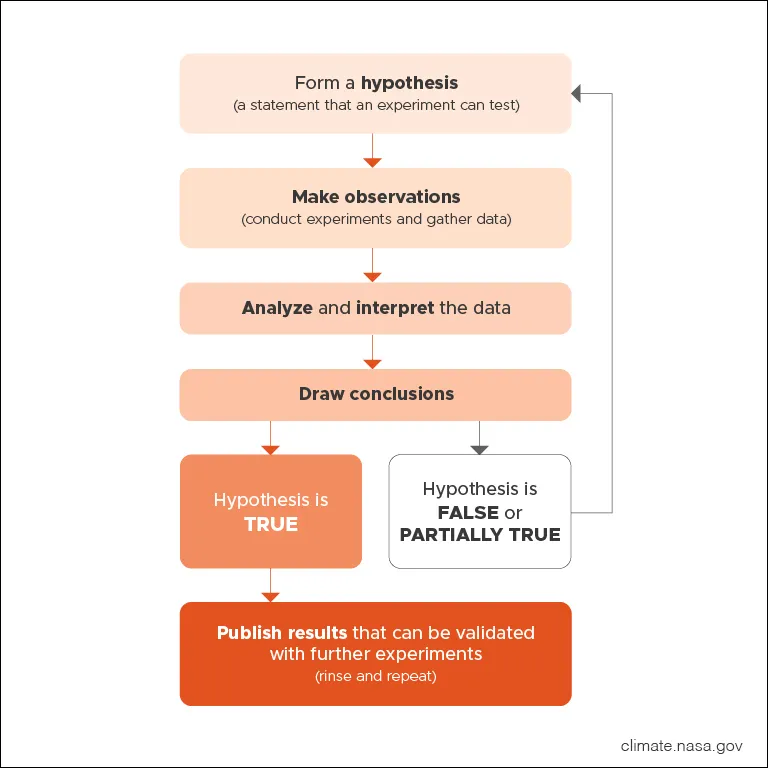
Science is one of the best ways we have to figure out what’s true. Scientists ask questions, gather evidence, test their ideas, and check each other’s work—again and again. If new evidence shows something different, they’re willing to change their minds. Science isn’t about always being right—it’s about getting closer to the truth over time. Scientists try to stay objective, make sure others can repeat their results, and share their work in trusted scientific journals where other experts review it. They also value transparency and open communication, sharing their methods and results so others can verify, build on, or repeat their work.

Propaganda
So what about propaganda? Propaganda has a very different goal: persuasion, not truth. It often starts with a conclusion like, “We need people to believe THIS,” and then works backward—choosing facts, half-facts, or even misinformation to support that goal. It’s designed to shape people’s beliefs or actions, often to serve a political, ideological, or financial agenda.
Propaganda uses strong emotions, repetition, and simple slogans to influence people. It may twist or ignore evidence that doesn’t fit its message and often lacks transparency, hiding or manipulating details. For example, it might show a misleading graph or share information that hasn’t been reviewed by trusted experts.
It also tends to shut down critical thinking by oversimplifying complex issues instead of encouraging questions.
In short, science works to understand the world based on evidence, while propaganda tries to influence what people think—often using biased or misleading information.
Common Propaganda Tricks
The four most common tricks are:
- Cherry-picking data
- Using “fake experts”
- Spinning half-truths
- Suggesting conspiracies
Cherry-picking data: selecting only the evidence that supports an argument while ignoring everything that doesn’t. A quick example of cherry-picking: sometimes people show graphs from millions of years ago when Earth was much hotter and carbon dioxide levels were higher than today. What they don’t tell you is that humans couldn’t survive under those conditions. The reason human civilization exists is because the climate cooled and became stable enough to support us.
Using fake experts: This is when someone points to a “scientist” who isn’t actually an expert in the topic they’re talking about. For example, a Nobel Prize winner in physics or optics isn’t the same as a climate scientist.
A well-known example is a petition claiming that 31,487 scientists said there’s no strong evidence that greenhouse gases are causing climate change. That sounds impressive—but if you look closely, few of the names are climate experts. The list includes accountants, pastors, veterinarians, and people who studied unrelated topics like freshwater fish. Some names have even been questioned or don’t check out. The few scientists who actually studied climate are affiliated with bad actors.
So if someone says, “A scientist said this,” it’s fair to ask: Do they study this topic? Have they published research on it? You can often check this using tools like Google Scholar. Websites like DeSmog can also help you understand who’s behind certain claims.
Spinning half-truths: An example of a half-truth is: CO2 was much higher in the past but the Earth didn’t boil away with a runaway greenhouse effect, this proves CO2 is not the great warming effect everyone has cracked it all up to be. What they don’t tell you is that the sun was much cooler than it is now. Humans didn’t exist either!
The conspiracy theory: An example of a conspiracy theory is the suggestion that long-lasting white contrails left by aircraft are actually chemical or biological agents sprayed by governments to control climate. And yes, there is some localized cloud-seeding to produce rain, but it doesn’t work very well and it certainly doesn’t cause climate change.
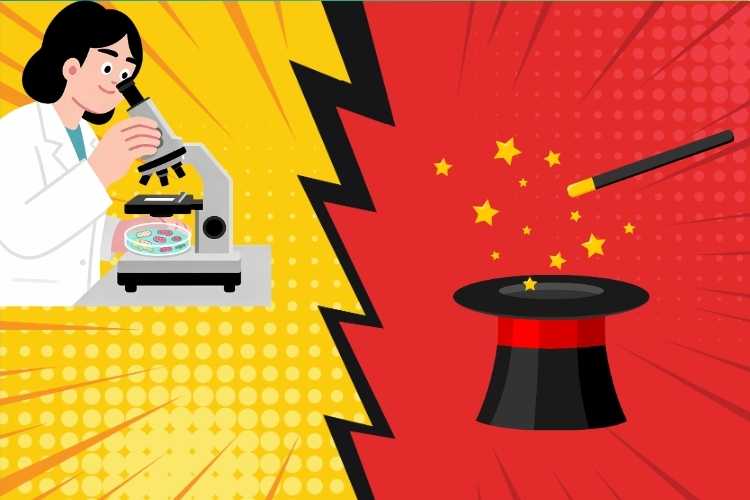
So propaganda is less like a science experiment… and more like a magician distracting you with one hand while the other hand does the trick.
Or even simpler:
Science is curious; propaganda is pushy.
- Science invites questions. Propaganda discourages them.
- Science changes with new data. Propaganda sticks to the same message—even when it’s wrong.
The Bottom Line
Next time you hear a bold claim, pause and ask:
- Where did this information come from?
- Is there strong evidence?
- Do other experts agree?
If you do that, congratulations—you’re thinking like a scientist.
And that’s one of the most powerful skills you can have.
Stay tuned—more good old-fashioned myth-busting coming your way in the fact-check section!