What Happens When Earthquakes Hit a Thawing Arctic?
What a rockslide on a tiny Arctic island can teach us about a warming world
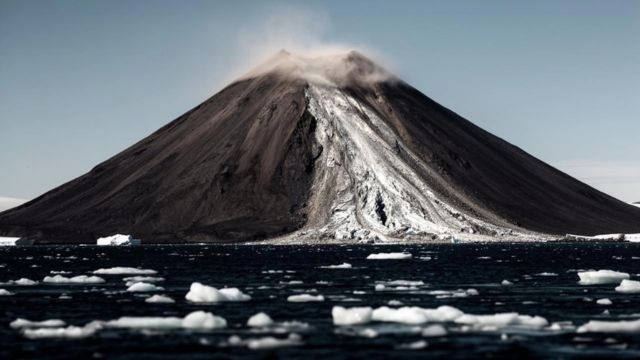
Way up in the Arctic, about halfway between Iceland and Norway’s Svalbard islands, there’s a skinny little island called Jan Mayen. It’s about 30 miles long. It has one volcano — a big one, Beerenberg — a handful of glaciers sliding down its sides, and no permanent residents except a rotating crew of about eighteen people who run a weather station.
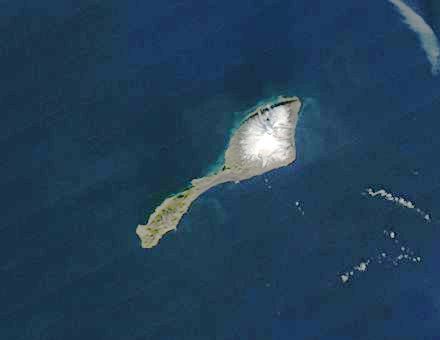
Credit: NASA
It is, in other words, one of the loneliest places on Earth. Which makes what happened there on March 10, 2025, easy to miss.
That day, a magnitude 6.5 earthquake rattled the island. And about four miles away from where the quake started, an entire chunk of mountainside let go. Rock, volcanic ash, and rubble came roaring down and spread across part of the Kjerulf Glacier, staining the white ice dark.
Nobody was hurt. No towns were buried. So why am I telling you about it?
Because a team of scientists just spent a year figuring out why that slope collapsed — and their answer, published in the journal PNAS, is one of those findings that quietly rearranges how you think about climate change.
Jan Mayen Has Always Had Earthquakes
Here’s the first thing to understand. That 2025 quake was not a freak event.
Jan Mayen is a remote, mountainous volcanic island in the Arctic Ocean. It sits on a major crack in Earth’s crust, where two tectonic plates grind past each other. Earthquakes there are routine — the geological equivalent of a Tuesday. The island has been shaken over and over for as long as anyone has been watching.
So the researchers, led by Dr. Guilherme W. S. de Melo at Germany’s GEOMAR ocean research center, asked an obvious question: if earthquakes are normal here, why did this one knock down a mountainside?
To find out, they pulled up satellite images of the Arctic island going back roughly 40 years and looked for anything similar. Other big quakes had hit during those four decades. Did any of them trigger a rock avalanche like this one?
No. Not one. In 40 years of pictures, nothing like it.
Same island. Same fault line. Same kind of shaking. Different outcome.
The Glue in the Mountain
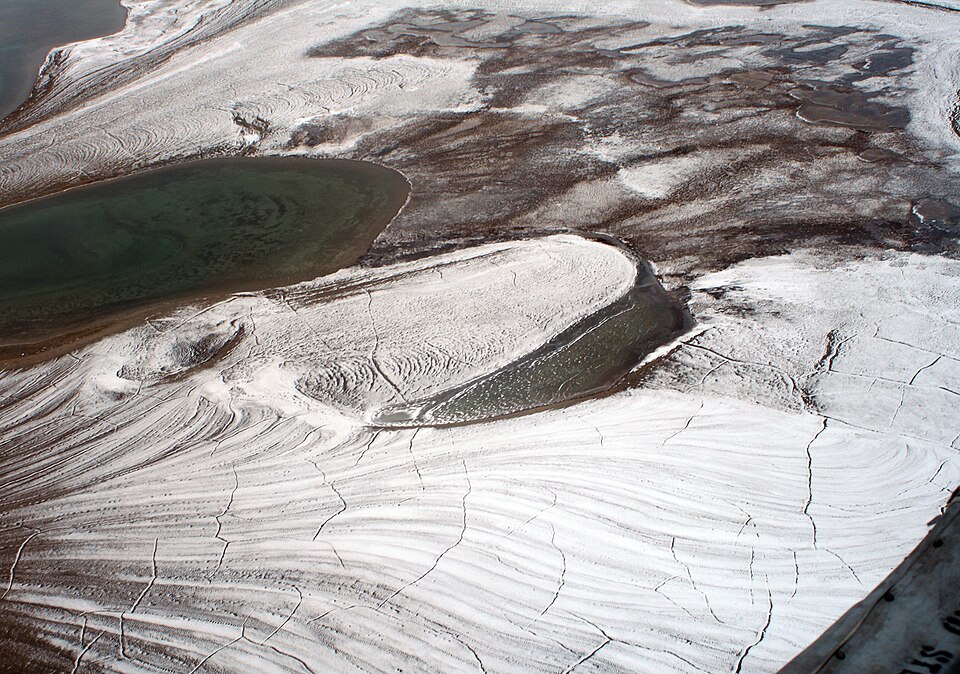
CC BY-SA 3.0 https://creativecommons.org/licenses/by-sa/3.0, via Wikimedia Commons
The difference, the researchers concluded, isn’t the earthquake. It’s the mountain.
Jan Mayen’s slopes are locked up in permafrost — ground that stays frozen year-round, sometimes for thousands of years. We usually talk about permafrost as frozen soil, but up on a steep rocky slope it does something else, and this is the part I want you to picture.
Rock isn’t one solid piece. It’s full of cracks. Water seeps into those cracks, freezes, and turns into ice. And that ice acts like glue — it wedges the cracks shut and holds the whole slope together as one stiff, stable mass.
Now warm the place up. The Arctic is heating up roughly four times faster than the rest of the planet, and that ice glue starts to soften and disappear. The cracks open. The slope stops being one solid block and starts being a stack of loose pieces leaning on each other.
Then an earthquake comes along and gives it a shove.
Forty years ago, that same shove would have bounced off a frozen, glued-together mountain. In 2025, it didn’t.
“A Silent Amplifier”
That phrase comes from the researchers, and I think it’s the most useful thing in the whole study.
Climate change didn’t cause the earthquake. It can’t. Earthquakes come from tectonic plates, and nothing we do to the atmosphere changes that.
But climate change changed what the earthquake was able to do. It quietly turned a stable slope into an unstable one, and then waited. The quake was the trigger. The warming was the reason the trigger mattered.
Dr. de Melo calls this a cascading hazard — one event knocking into the next, like dominoes. Earthquake knocks loose the rock. Rock buries the glacier. And burying a glacier isn’t nothing, either: a thick layer of dark debris changes how the ice absorbs sunlight and how it flows, which can affect the glacier for years to come.
This is a different way of thinking about climate risk than most of us are used to. We tend to imagine climate change as a list of new disasters: hotter heat waves, bigger hurricanes, higher seas. Those are real. But this study is describing something sneakier — climate change making old, familiar hazards hit harder than they used to. The earthquake was always going to happen. The landslide didn’t have to.
Why a Nearly Empty Island Matters
I can already hear someone asking: who cares about a rockslide where nobody lives?
Fair question. Here’s the answer.
Jan Mayen is basically a natural laboratory. Because almost nobody lives there, there are no roads, no logging, no construction — none of the human meddling that usually muddies the picture. When a slope fails on Jan Mayen, you can be pretty confident it wasn’t because someone cut a highway through it. That makes it a clean test case for what warming alone does to frozen ground.
And the same setup — steep slopes, thawing permafrost, ice below — exists in a lot of places where people very much do live. Alaska. Northern Canada. Norway. Switzerland and the Alps. The high Himalaya, where mountain communities have been hit repeatedly in recent years by floods and debris flows set off by failing ice and rock. The research team specifically pointed to recent cascading disasters along the Nepal–China border as the same story playing out somewhere with villages at the bottom of the valley.
Jan Mayen is where we get to see the mechanism clearly, without anyone getting hurt. The lesson is meant to be carried elsewhere.
What I Keep Thinking About
What sticks with me about this study is the waiting.
The mountain didn’t announce anything. There was no visible moment when the slope crossed from safe to unsafe. The ice inside the rock just kept quietly retreating, year after year, while the island looked exactly the same from the outside. All that stored-up instability sat there, invisible, until an ordinary earthquake came along and cashed it in.
That’s a good reminder that a lot of what climate change is doing right now isn’t dramatic. It’s structural. It’s happening inside things — inside rock, inside soil, inside ice — where we can’t see it, changing what the next ordinary event will cost us.
The satellites caught this one because someone thought to look back 40 years and ask a simple question: has this ever happened here before?
Sometimes that’s the whole job. Ask the question. Look at the record. Notice when the answer is no.
Curious about what’s happening with our climate? Keep an eye out right here!