Trust Me, I’m a Doctor: How Fake Experts Sell Doubt
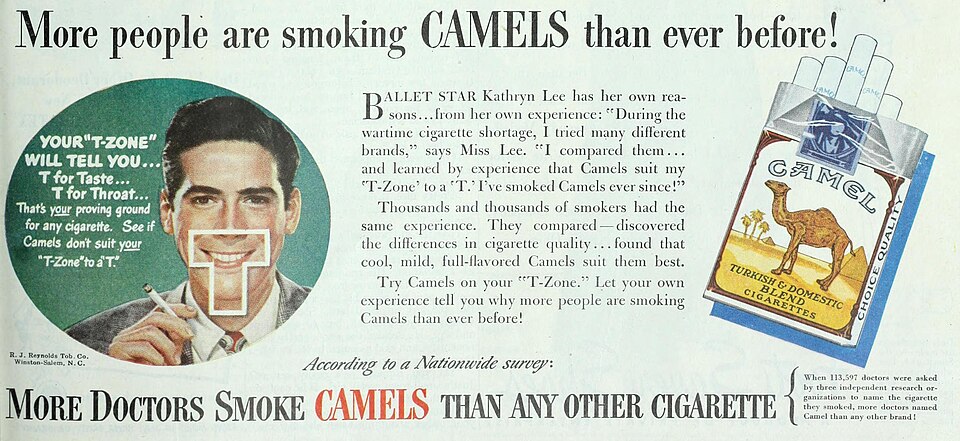
Take a look at this magazine ad from 1946. A friendly man in a white coat smiles at you, cigarette in hand. The headline says, “More doctors smoke Camels than any other cigarette.” It’s a classic example of the fake expert technique—using the appearance of medical authority to make a dangerous product seem safe and trustworthy.
It worked. Camel ran that slogan for six years.
But here’s the kicker. R.J. Reynolds, the company behind Camel, reportedly “surveyed” those doctors right after handing them free cartons of Camels.
That ad is one of the oldest tricks in the science denial playbook. And it’s still being used today — with climate change, vaccines, renewable energy, and more.
The Science Denial Playbook
Science denial isn’t the same as healthy skepticism. Skeptics ask questions and follow the evidence. Denial starts with the answer it wants and works backward.
And it almost always uses the same handful of tricks. Cognitive scientist John Cook boiled them down to five, with an easy-to-remember abbreviation: FLICC.
- Fake experts
- Logical fallacies
- Impossible expectations
- Cherry picking
- Conspiracy theories
Over the next few posts, I’ll take them one at a time. In this blog post, I’m starting with the first one, because it’s everywhere once you know how to spot it.
What’s a Fake Expert?
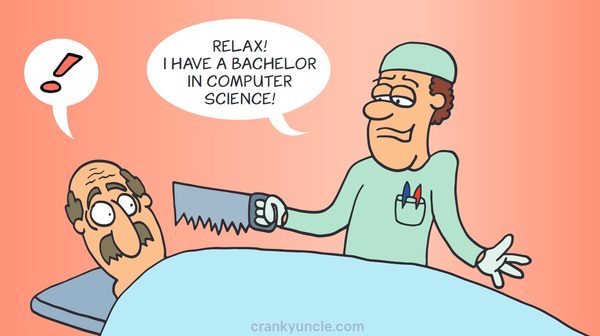
A fake expert is someone who sounds like an authority but isn’t one on the topic at hand.
Think about it this way. Your dentist is an expert in dentistry, but would you trust them to rebuild your car’s transmission? Of course not! Being an expert in one field doesn’t make someone an expert in everything. The same goes for science. Someone with a Ph.D. in quantum mechanics may be brilliant in their field, but that doesn’t make them an expert in climate science. Expertise comes from years of studying, researching, and working in a particular field—not simply from having an advanced degree.
The goal usually isn’t to win the argument. It’s to make you think scientists are still arguing — so you shrug and do nothing.
Fake experts come in a few different flavors.
The 31,000 “Scientists”
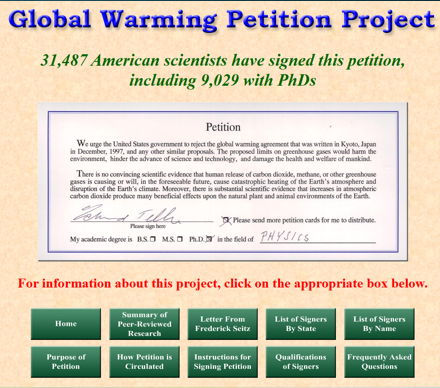
The most famous example of fake experts is called the Oregon Petition.
It goes back to 1998. That’s when Arthur Robinson, head of a small group called the Oregon Institute of Science and Medicine, launched an online petition asking scientists to reject the global climate treaty known as the Kyoto Protocol. It claimed about 17,000 signatures at first. Today, the group says more than 31,000 people have signed, including about 9,000 with PhDs.
Sounds impressive. Not so fast.
Here’s why:
- Anyone could sign. It was an online form. Robinson himself admitted to the Associated Press that there was no way to filter out fakes. Believe it or not, early versions of the list even included one of the Spice Girls.
- Most signers aren’t climate experts. The list includes veterinarians, engineers, plastic surgeons, accountants, history teachers, and names of people who couldn’t be found.
- Only 39 signers are climate scientists. That’s about one tenth of one percent of the list.
- 31,000 isn’t actually a big number. The whole list adds up to roughly 0.3% of the science graduates in the United States.
In other words, it’s like rounding up 31,000 people who once took a science class (or not) and calling them a panel of climate experts.
Coalition of Confusion
Here’s another shining example of fake expertise: the CO₂ Coalition — I call them the “Coalition of Confusion.”
Let’s meet a few of their “stars”:
- William Happer – an expert in optics (light and lenses) who takes fossil-fuel money and has zero publications in climate science.
- Rodney Nichols – a physicist, but again, no climate background.
- Jan Breslow – a medical doctor, not a climate researcher.
- John Clauser, yes, a Nobel Prize–winning quantum physicist, but his expertise is in photons and quantum mechanics, not planetary physics or atmospheric science.
These folks proudly wear the “science” label, but not the expertise that goes with it.
Where Did This Trick Come From?
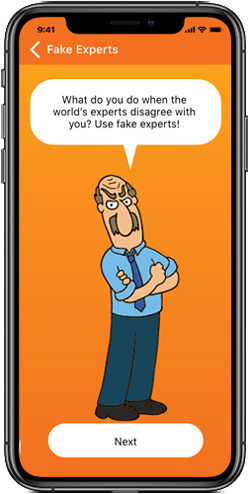
You may have guessed it from the featured image. Big Tobacco.
In the 1950s, scientists found strong evidence that smoking causes lung cancer. Tobacco companies didn’t have the science on their side. So they hired their own experts and funded their own research groups to say the link “wasn’t proven yet.” They didn’t need to win the argument. They just needed people to feel unsure. One tobacco company memo from 1969 put it bluntly: “Doubt is our product.”
Here’s the irony: historians Naomi Oreskes and Erik Conway (who I was lucky to work with at NASA’s Jet Propulsion Laboratory) found that some of the very same people who defended tobacco later went to work casting doubt on climate change. They tell the whole story in their book Merchants of Doubt. The product changed. The playbook didn’t.
What Does the Research Show?
The scientific evidence is overwhelming: More than 99.9% of published, peer-reviewed scientific papers agree that humans are the main cause of today’s climate change. That’s according to a study that examined 88,125 climate-related papers.
The findings build on a similar study from 2013, which found that 97% of scientific papers published between 1991 and 2012 agreed that human activities were changing Earth’s climate. The newer study looked at research published between 2012 and November 2020 and found that the scientific agreement had grown even stronger.
Not surprisingly, those spreading climate misinformation weren’t happy with this study. So they tried to twist the statistics to cast doubt on its findings.
Of the nearly 12,000 scientific paper summaries researchers examined, about two-thirds didn’t discuss what was causing global warming. Critics claimed that leaving out those papers made the scientific agreement look much stronger than it really was. They argued that including them would dramatically lower the percentage of studies supporting human-caused climate change.
But here’s what they’re missing: Not every climate study is trying to figure out what’s causing global warming. Some examine melting glaciers, rising sea levels, changing rainfall patterns, or how wildlife responds to a warming planet. Just because a paper doesn’t discuss the cause of climate change doesn’t mean its authors disagree with the scientific consensus.
A paper that doesn’t address a question isn’t evidence against the answer. That’s why researchers calculated the level of agreement using studies that actually took a position on the cause of global warming.
The “Both Sides” Trap
Fake experts have a cousin, and it’s sneaky. Scientists call it the magnified minority.
Picture a TV news segment. On one side, a climate scientist. On the other side, someone who says it’s all natural. Two people, two chairs, equal time. It looks like a 50-50 fight.
But the real numbers look more like 99 to 1. Giving each side equal time is like inviting one astronaut and one flat-earther to debate the shape of the planet. It’s “balanced” — and it’s completely misleading.
How to Spot a Fake Expert
The next time someone waves around a list of so-called scientists or a “Dr.” who says climate change is a hoax, ask a few simple questions:
- What do they actually study? Is their field climate science, or something else entirely?
- Have they published research on this topic? Real experts publish peer-reviewed studies — research checked by other scientists before it’s printed.
- Is it research or a petition? Science gets settled by evidence, not by collecting signatures.
- Who’s paying them? Follow the money. Many denial groups have ties to fossil fuel companies.
- What do the big science groups say? NASA, NOAA, and national science academies around the world all agree that humans are warming the planet.
What Can Actually Help
The good news? Fake experts lose a lot of their power once people know the trick. In fact, John Cook’s own research found that explaining how a fake-expert trick works ahead of time helps protect people from falling for it. Scientists call it “prebunking” — kind of like a flu shot for misinformation.
Things you can do:
- Learn the FLICC tricks and teach them to your kids and grandkids.
- When a “scientist says” claim shows up in your feed, check who that scientist is before you share it.
- Share the 99% number. Many people still think scientists are split down the middle.
- Talk with friends and family kindly. Ask questions instead of arguing.
Things we can push for together:
Support climate and media literacy education in schools.
Ask news outlets to stop pretending there are “both sides” when it comes to topics like climate change or vaccines.
Back school board members in your area who value climate education and scientific research.
Don’t miss my full fact-checking series, where I separate science from disinformation. And stay tuned! I’ll be sharing four more examples of how scientific facts get twisted into propaganda.
Are you interested in Dr. John Cooks work? He has both the “Cranky Uncle vs. Climate Change: How to Understand and Respond to Climate Science Deniers” book and even a Cranky Uncle game in your app store!