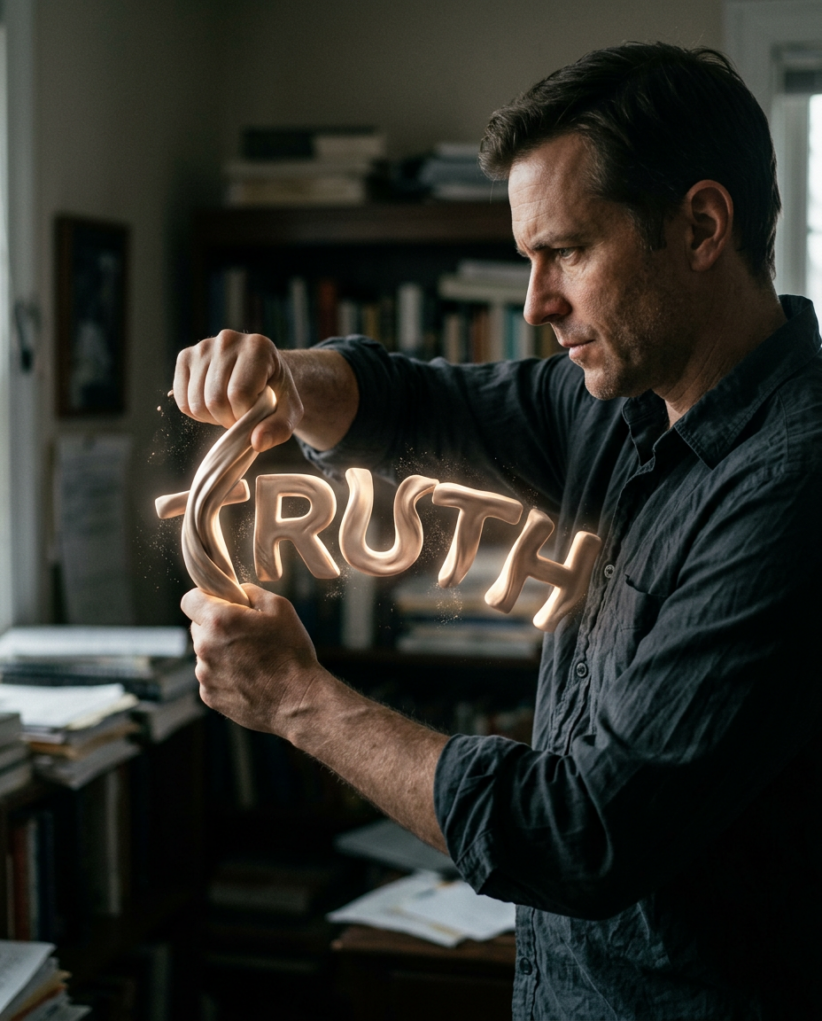
Logical Fallacies: How Science Deniers Twist the Truth
You’ve probably seen this on social media. “It snowed like crazy last winter. So much for global warming!”
It sounds reasonable–for a second. Then something nags at you. But what, exactly?
Here’s the kicker: the facts in an argument can be true while the reasoning is broken. That’s what a logical fallacy is — a mistake in how an argument connects the dots.
Think of it like a bridge with a missing beam. Everything looks fine from a distance. It’s only when you try to walk across that you fall through.
People who deny climate science lean on these broken bridges again and again. And the good news? Once you learn to spot the tricks, they lose a lot of their power.
The Science Denier’s Playbook Has Five Plays
As I wrote about in my first part of the series, people who deny climate change, vaccines, and even the link between smoking and cancer all use the same handful of tricks (and some of the same people).
Science blogger Mark Hoofnagle discovered the pattern back in 2007. Two years later, Pascal Diethelm and Martin McKee wrote about it in the European Journal of Public Health and urged scientists to call the tricks out by name.
Cognitive scientist John Cook — founder of the website Skeptical Science — turned them into an easy-to-remember acronym: FLICC.
- Fake experts — someone who sounds qualified but isn’t an expert in the field.
- Logical fallacies — conclusions that don’t actually follow from the facts.
- Impossible expectations — demanding perfect certainty before we do anything.
- Cherry picking — grabbing the data that fits and ignoring the rest.
- Conspiracy theories — claiming scientists are in on some secret plot.
Logical fallacies get only one letter. But they hide inside the other four, too. Here are six that show up again and again in climate myths with different flavors.
Six Flavors of Logical Fallacies to Watch For
Flavor One: Single Cause
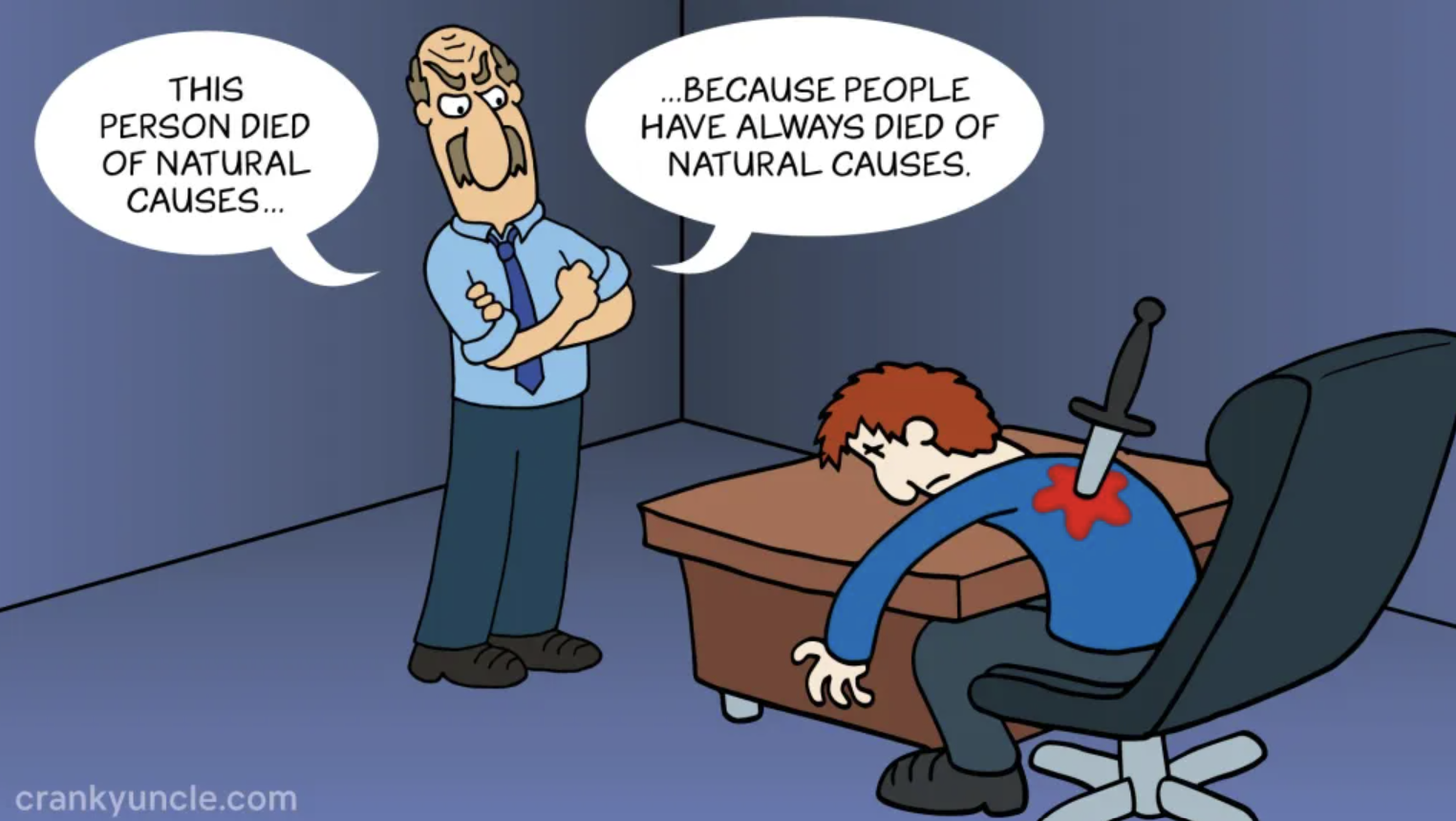
It assumes a change can only have one reason. Yes, the climate has changed naturally many times. That doesn’t mean it’s natural now.
“The climate changed before humans came along.”
Just because natural forces, like changes in Earth’s orbit or volcanic activity, caused climate change in the past doesn’t mean humans can’t be responsible for it today. Think about it this way: People have been dying of natural causes for thousands of years, but that doesn’t mean someone can’t be murdered. The same goes for climate change. Different things can cause the same result. Natural forces changed Earth’s climate in the past, but today, the overwhelming scientific evidence shows that human activities, especially burning fossil fuels, are driving global warming.
Flavor two: Ambiguity
“Scientists admit there’s uncertainty. So they don’t really know.”
The trick: Ambiguity. It’s also called equivocation. A word means one thing to scientists and something else in everyday talk — and the argument quietly slides between the two.
To you and me, “uncertain” means “who knows?” To a scientist, it means “here’s our best measurement, give or take a little.” Your bathroom scale might be off by half a pound. It can still tell you if you gained 20.
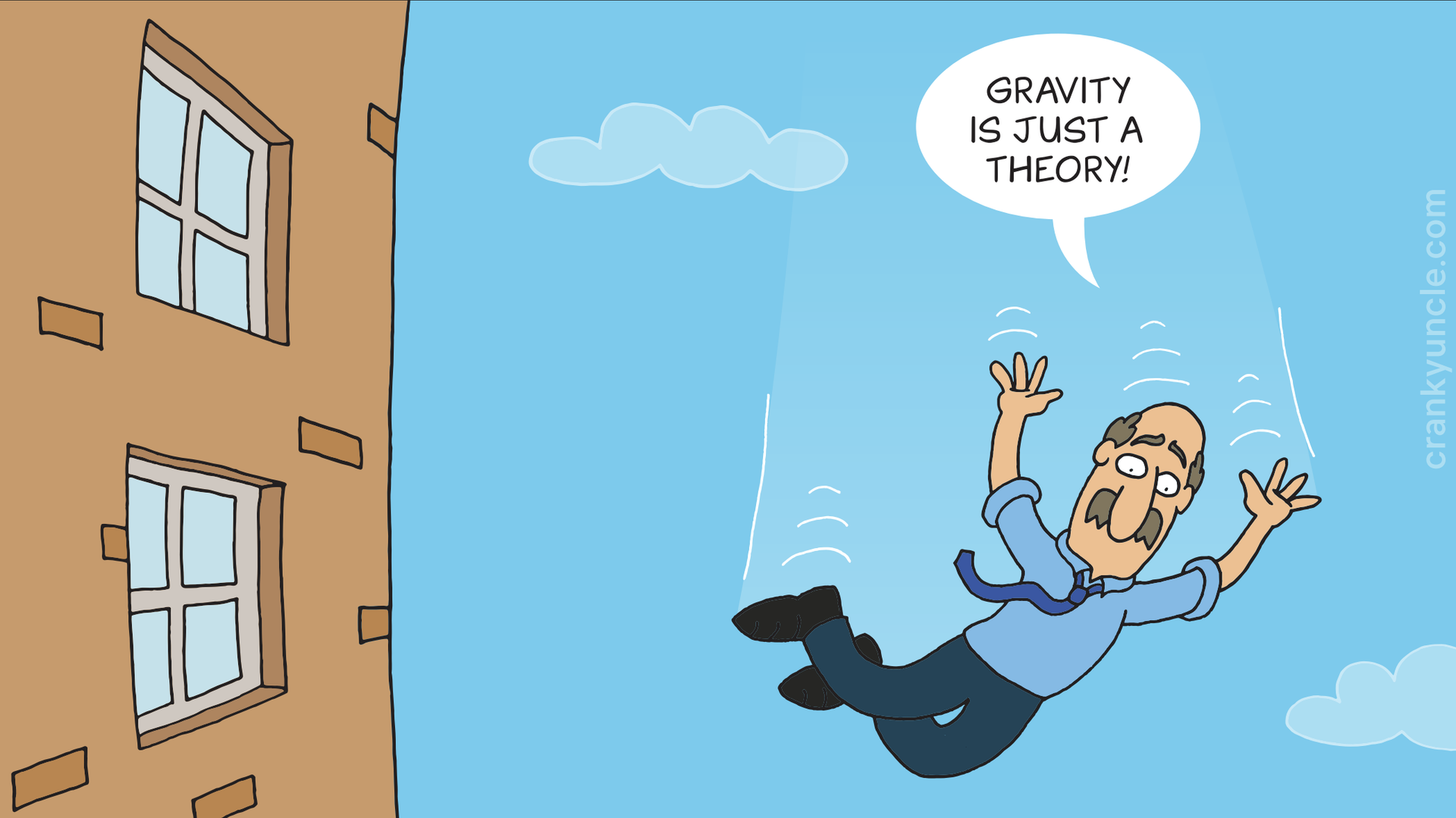
“It’s just a theory” pulls the same trick. In science, a theory isn’t a hunch. It’s a well-tested explanation — like the theory of gravity.
Flavor three: Ad hominem
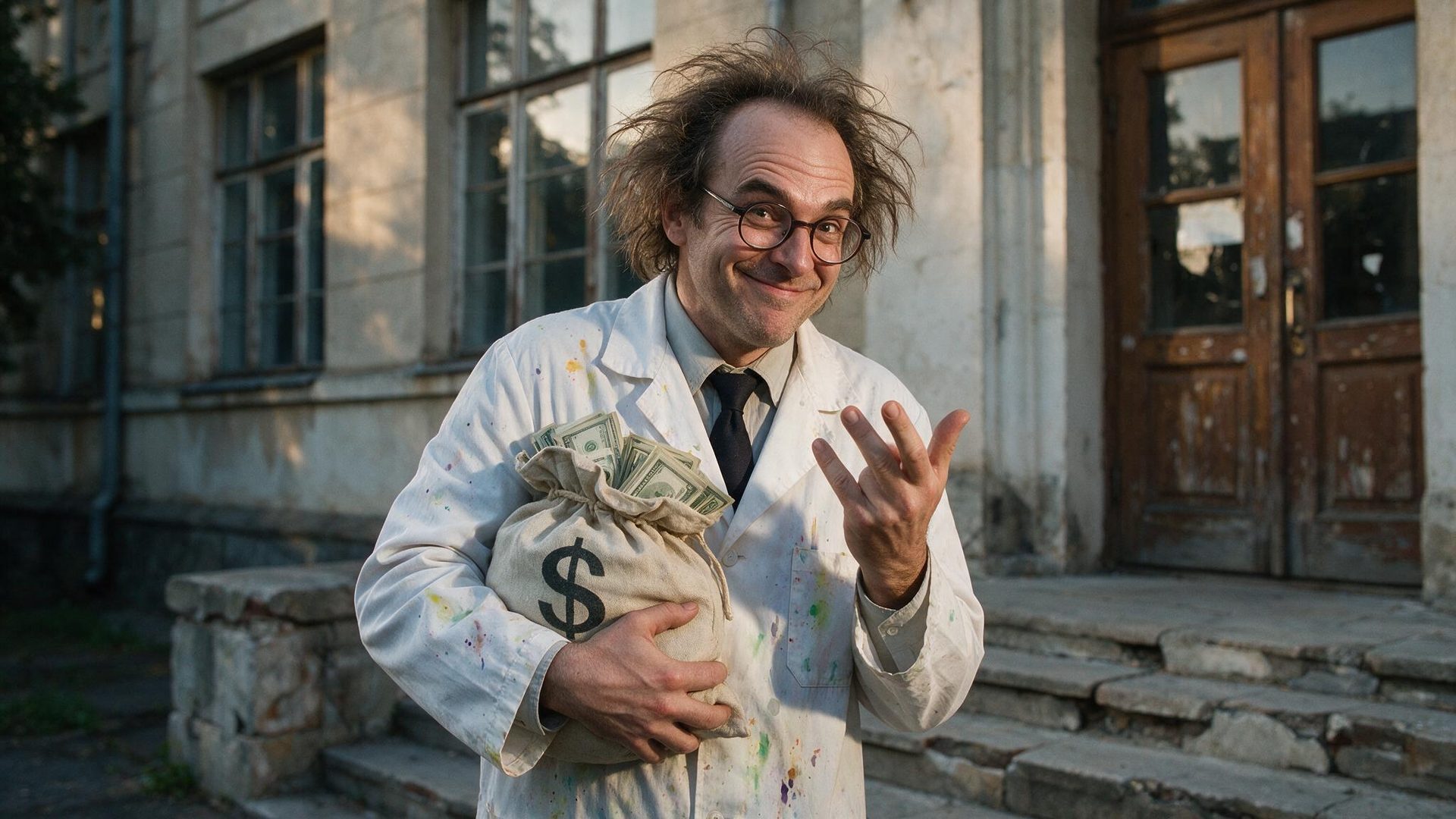
“Climate scientists are just in it for the grant money.”
That’s a fancy Latin way of saying “attack the person, not the argument.”
If scientists were in it for the money, believe me, there are much easier ways to get rich! Research grants are highly competitive, and that money doesn’t go straight into scientists’ pockets. It helps pay for equipment, graduate students, and the research itself.
Scientists looking to strike it rich would probably have much better luck in private industry than spending years competing for research grants. Dr. Kathrine Hayhoe says it best: Climate change, that’s just a money grab by scientist… right?
Flavor four: False Equivalence/False Balance
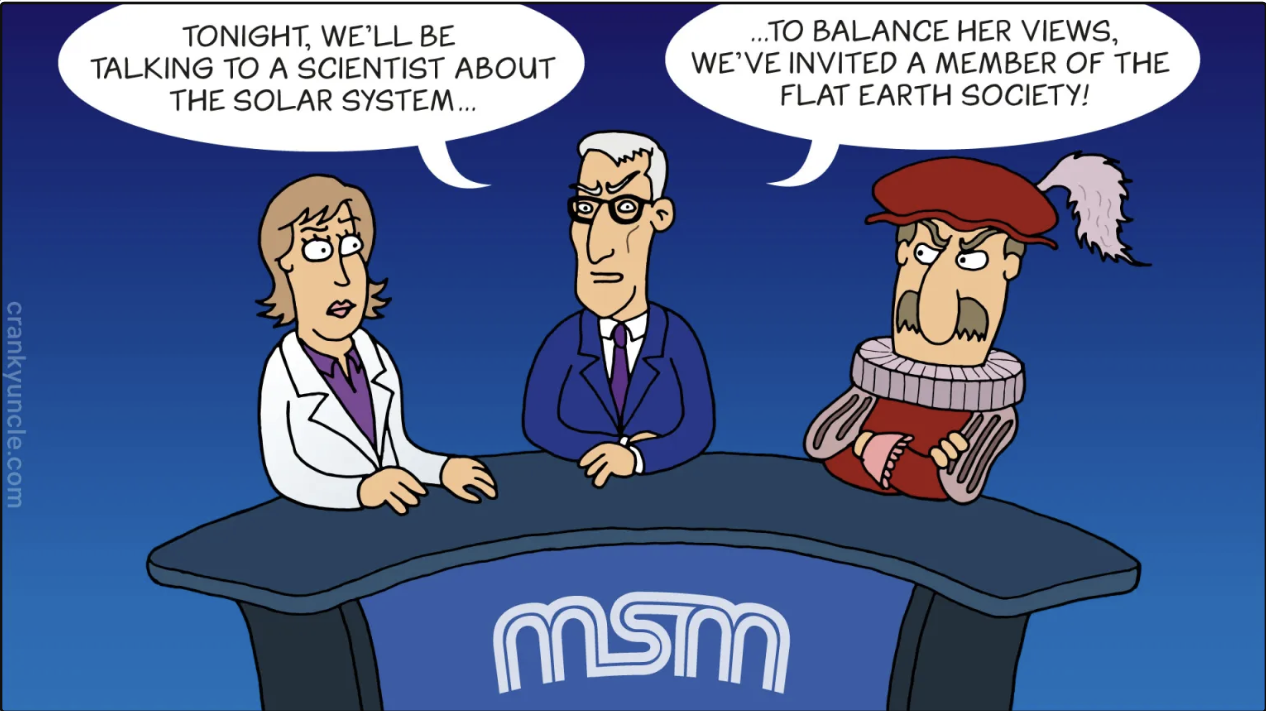
It gives a tiny minority the same weight as nearly the whole scientific community.
Sounds fair, right? Not so fast.
Here’s how silly that is. If 97 out of 100 mechanics said your brakes were failing, you wouldn’t give the other 3 an equal vote. You’d fix your brakes (I hope).
Flavor five: Straw man
A straw man argument twists, exaggerates, or takes someone else’s argument out of context to make it easier to attack.
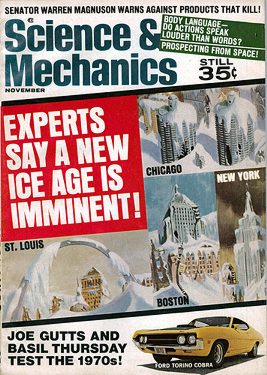
Here’s one I see almost every day on social media: “Back in the 1970s, climate scientists were warning us about an ice age. Now they’re warning us about global warming. They can’t make up their minds!”
But that’s not what actually happened.
Back in the 1970s, a handful of scientists were concerned that certain air pollutants might cool the planet. Tiny particles called aerosols, especially those produced by burning fossil fuels, can reflect sunlight back into space, reducing the amount of heat Earth absorbs. Scientists were trying to figure out whether this cooling effect might outweigh the warming caused by greenhouse gases.
But here’s what often gets left out: Most scientific studies examining future temperatures were already pointing toward global warming, not an ice age.
Unfortunately, sensational headlines, including Newsweek’s famous 1975 article “The Cooling World,” made it sound like scientists were predicting a frozen future.
And guess what? Those aerosols are still cooling the planet today, partly hiding the full warming effect of our greenhouse gas emissions. As we clean up air pollution, we also reduce that cooling effect.
So what’s the straw man? Taking a minority scientific view, mixing it with a few dramatic headlines, and pretending that climate scientists once agreed we were heading into an ice age. They didn’t.
Flavor six: Red herring
“CO₂ is just a trace gas. It can’t matter.”
The trick: Red herring. It drags your attention to something beside the point. The real question isn’t how much CO₂ there is. It’s what CO₂ does.
Put a few drops of food coloring in a glass of water. It’s a tiny fraction of the glass — and the whole thing turns blue. Carbon dioxide is the food coloring of our atmosphere. A little bit traps a lot of heat.
So, What Can We Do About It?
We know that piling on more facts often doesn’t change minds. But showing people how a trick works does.
John Cook’s research keeps finding the same thing. Scientists call it inoculation — like a flu shot for your brain. A small, harmless dose of the trick helps you resist the real thing later. And once you spot a trick on one topic, you’ll spot it on others.
What you can do:
- Name the trick, not the person. “That’s cherry picking” lands better than “You’re wrong.”
- Use a truth sandwich. Start with the fact. Briefly name the myth and the trick behind it. End with the fact again.
- Ask a friendly question. “Where’d that number come from?” opens more doors than an argument.
- Play a game. John Cook’s free Cranky Uncle game teaches the tricks with cartoons. It works on phones and web browsers — and it’s great to play with grandkids.
- Stay kind. Most people repeating a myth aren’t liars. They were fooled, too.
What we can push for together:
- Media literacy in every classroom. California already took a big step. In 2023, Gov. Gavin Newsom signed Assembly Bill 873, which adds media literacy to lessons in English, science, math, and history from kindergarten through 12th grade.
- Teacher training to go with it. Critics point out the law didn’t come with money to train teachers. That’s worth raising with your local school board and state lawmakers.
When You Put It All Together…
A bad argument doesn’t need good facts. It just needs us not to notice the missing plank.
So the next time someone tells you a snowy day disproves global warming, you don’t have to win a shouting match. You just have to ask: Which trick is this?
We are living in a flood of disinformation. Teaching others to spot the tricks may be one of the best gifts we can give them.
Don’t miss my previous blogs about climate disinformation, including Trust Me, I’m a Doctor: How Fake Experts Sell Doubt and Unmasking CO₂ Myths.
Some Really Great References
- John Cook, A history of FLICC: the 5 techniques of science denial, Skeptical Science
- Pascal Diethelm and Martin McKee, Denialism: what is it and how should scientists respond?, European Journal of Public Health, 2009
- Dana Nuccitelli, Five ways Joe Rogan misleads listeners about climate change, Yale Climate Connections (on Cook’s inoculation research)
- Cranky Uncle game
- Carolyn Jones, Recognizing fake news now a required subject in California schools, CalMatters
- Peterson, Connolley & Fleck (2008), “The Myth of the 1970s Global Cooling Scientific Consensus,” Bulletin of the American Meteorological Society;