
La Niña Years—Our “Cool” Years—Are Now Warmer Than El Niño Years
Every year, Earth’s temperature changes a little. Sometimes it gets hotter, and sometimes cooler. Scientists track this closely to understand how our climate is changing.
But it’s not just about climate change. Natural patterns in the ocean also affect short-term global temperatures. Two of the biggest ones are called El Niño and La Niña. These are part of a system called the El Niño–Southern Oscillation, or ENSO for short.
What Is El Niño?
El Niño, Spanish for “little boy” happens every two to seven years when trade winds weaken. Warm water builds up in the central and eastern Pacific Ocean, close to South America. This pushes more heat into the air, making Earth’s average temperature go up. During strong El Niño years, like in 1998 and 2016, we saw record-breaking heat around the world.
El Niño isn’t just one event—it’s more like a chain reaction that affects weather in many places around the globe. From June to September, India usually gets heavy monsoon rains. But during an El Niño year, those rains often get weaker, and that can lead to droughts. Australia and Indonesia can also become very dry during El Niño, especially in the fall months for the Northern Hemisphere. In some cases, the dryness can lead to extremely large, dangerous wildfires.
In winter, El Niño can bring more storms and rain to California and the southwestern U.S. But not every El Niño is the same—sometimes it still stays dry, and sometimes a La Niña year brings unexpected rain, like it did in 2022.
What Is La Niña?
La Niña means “little girl” in Spanish and is the opposite of El Niño . It brings cooler water to the surface in the eastern Pacific Ocean. This helps cool the air and can make Earth’s temperature a little lower than usual.
During a La Niña year, strong winds called trade winds get even stronger. They push warm water across the Pacific Ocean toward Asia. That makes colder water rise to the surface near the west coast of North and South America.
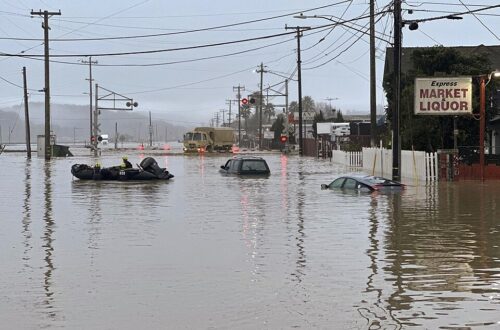
These cold waters change the path of the jet stream, pushing it farther north. That can lead to dry weather and drought in the southern U.S. and heavy rain and flooding in the Pacific Northwest and parts of Canada.
La Niña also affects temperatures: Winters in the southern U.S. are usually warmer than normal. Winters in the northern U.S. are usually colder than normal
La Niña can also make hurricane seasons more active and intense, especially in the Atlantic Ocean.
What’s Really Striking About El Niño and La Niña?

Here’s something surprising: recent La Niña years—our “cool” years—are now warmer than El Niño years from just a few decades ago. That means what we used to think of as hot is now considered cool by today’s standards. Earth’s new normal is hotter than before—even during its “cool” times.
Curious about what’s happening with our climate and what we can do about it? 🌱 Follow my Climate page—and join the conversation on Facebook, Instagram, Bluesky, and Pinterest!