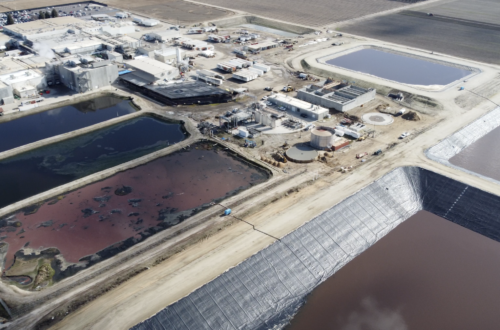

Why AI Data Centers Need So Much Water
You’ve probably heard how fast artificial intelligence (AI) is growing — things like chatbots, smart apps, and online games all use powerful computers hidden inside data centers. These buildings are full of servers (big, fast computers) that help process all the information we send and get online. But what most people don’t think about is that these huge computer hubs need a LOT of water, and that’s causing real problems in places like Texas, Virginia, California, and Arizona.
What Do Data Centers Actually Do?
When you send a text, stream a video, ask an AI a question, or post a photo, it doesn’t just float around in the air. That information travels through the internet to a data center — a large building filled wall-to-wall with powerful computers called servers.
Think of a data center like a super-organized digital library mixed with a factory.
📚They Store Information
Every photo you upload, every document in the cloud, every saved game, and every email lives on servers inside data centers. These machines store massive amounts of data — way more than any laptop or phone ever could.
⚙️ They Process Information
Data centers don’t just store things. They also do the thinking work.
When you:
- Ask an AI tool a question
- Search for something online
- Use a voice assistant
- Stream a movie
The request goes to a data center. The servers there:
- Receive your request
- Process it at lightning speed
- Send the answer back to you in seconds
For AI systems, this takes even more power. AI models must:
- Analyze huge amounts of data
- Run complex math calculations
- Compare patterns
- Generate answers
That means thousands of high-powered computer chips are working at the same time.
🔌 They Run 24/7
Data centers never sleep. Ever.
Unlike a school or office building, they operate:
- Day and night
- Weekends
- Holidays
Even when you’re asleep, data centers are:
- Backing up data
- Updating systems
- Running online services
- Training AI systems
That constant activity creates a huge amount of heat — which is why cooling them becomes such a big issue.
🔥Why They Get So Hot
Imagine running thousands of gaming computers in one building — all at full speed — all day long. That’s what a data center is like.
When computer chips process information, they turn electricity into heat. AI systems use especially powerful chips that can get extremely hot, extremely fast. If the servers overheat:
- They slow down
- They crash
- They can even be damaged
So cooling systems are absolutely necessary.
🌍 Why This Matters
The “cloud” isn’t invisible magic. It’s physical. It requires:
- Huge buildings
- Enormous amounts of electricity
- And, in many cases, large amounts of water for cooling
As AI grows, data centers are getting:
- Bigger
- More powerful
- More energy-intensive
- And thirstier
That’s why understanding what data centers actually do helps us understand why their water use matters — especially in dry places like Texas.
🧠 Are There Any Solutions?
Yes, there are smart solutions. Data centers can switch to cooling systems that use much less water, recycle water instead of using drinking water, and build in cooler or less drought-prone places. Companies can also design more efficient computer chips and AI systems so they create less heat in the first place. On top of that, using renewable energy like wind and solar reduces the extra water used to generate electricity. The technology exists — it just takes smart planning, transparency, and a commitment to protecting local water supplies while AI continues to grow.
Interested in the impacts of AI on the planet? Check out this post!