
China Is the World’s Renewable Energy Champion
China keeps breaking records when it comes to renewable power. China’s renewable energy boom continued in the first two months of 2026, when the country added about 45 gigawatts of new green energy. That’s enough electricity to supply millions of households. Out of all the new power plants built in those two months, more than two out of every three came from solar panels and wind turbines.
By the end of February, China’s total renewable energy capacity had grown to about 2,380 gigawatts. That means renewables now make up about 60% of all the power-generating capacity in the entire country–solar farms, wind turbines, hydroelectric dams, and more.
China isn’t just using clean energy—it’s also the world’s biggest energy champion. Chinese factories produce most of the world’s solar panels, batteries, and electric cars. Because China makes so much of this equipment, prices have dropped, which makes clean energy more affordable. This is the engine behind China’s renewable energy dominance: scale, speed, and falling costs.
Sky-High Power: Meet the Wind Balloons Floating Above the Clouds
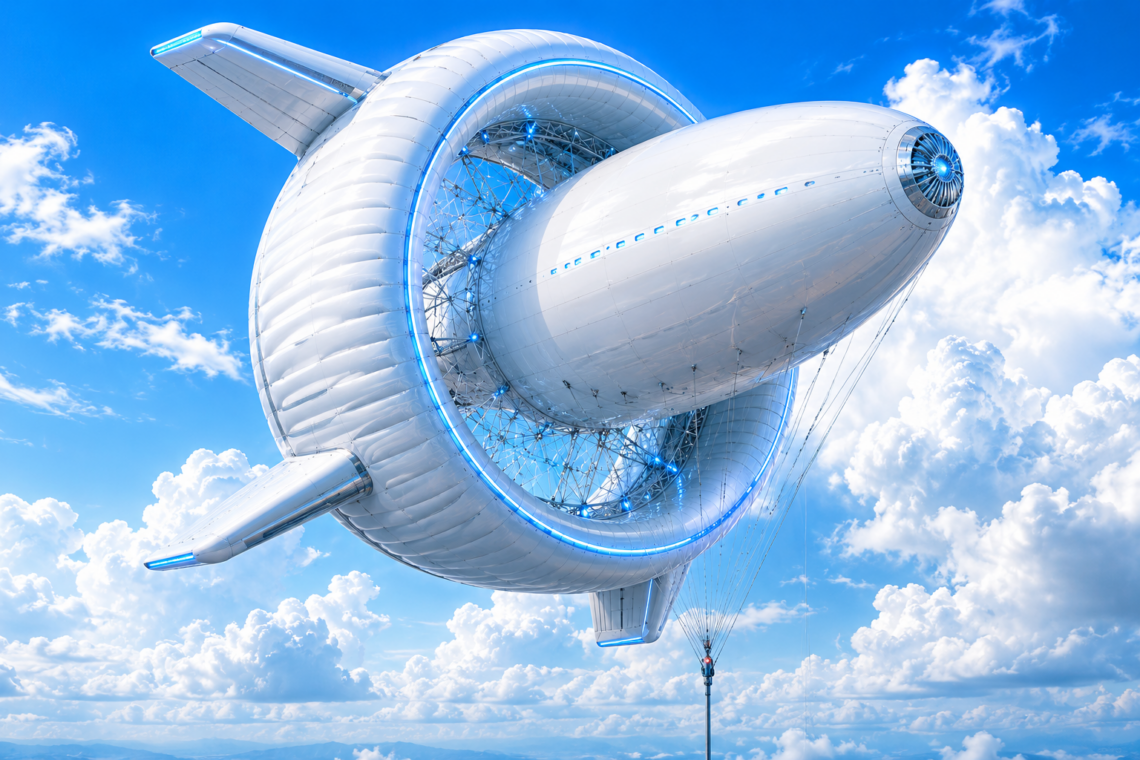
China just tested something pretty wild: a giant floating wind turbine that flies way up in the sky instead of standing on the ground.
The machine is called the S2000, and it’s basically a blimp with wind turbines built into it. It flew 2,000 meters high (over a mile up!) in Sichuan Province, China, and made history as the first high-altitude wind device to actually send electricity into a power grid.
Here’s how it works: regular wind turbines spin their blades when wind hits them down on the ground. This one does the same thing, just way up in the sky, where winds are stronger and steadier. The electricity it makes travels down to the ground through long cables hanging from the aircraft.
During its test flight, the S2000 stayed up for about 30 minutes and produced 385 kilowatt-hours of electricity — that’s roughly enough to power a typical home for two weeks. The whole structure is huge: about 60 meters long, 40 meters wide, and 40 meters tall (close to the length of a football field).
According to one of the engineers behind the project, the team had to solve two big problems. First, they figured out how to design a giant aircraft that could fly steadily and handle wind. Second, they created a special power cable system that’s lightweight but still sends electricity down efficiently without losing much energy.
Right now, it’s still being tested. But if it works out, this kind of flying turbine could become a new way for cities to generate clean energy in the future.
How China Is Reinventing the Battery

China isn’t just building more batteries—it’s reinventing them. One of the most exciting new technologies is the sodium-ion battery, which uses sodium instead of lithium. Since sodium is one of the most common elements on Earth, these batteries could be much cheaper to make and reduce the need to mine as many rare minerals. They’re also less likely to overheat and perform better in cold weather. In 2026, Chinese companies began producing sodium-ion batteries on a large scale, bringing this promising technology one step closer to everyday use.
China is also racing ahead with solid-state batteries, which many experts believe could be the future of electric vehicles. Unlike today’s batteries, they use a solid material instead of a flammable liquid, making them safer and able to store more energy. That could allow electric cars to drive much farther on a single charge while charging faster than ever before. These batteries are still being tested, but if they live up to their promise, they could make electric vehicles more affordable, help store more renewable energy, and speed up the world’s move away from fossil fuels.
Last year, China’s SAIC Motor made headlines by releasing the MG4, the world’s first mass-produced electric car with a semi-solid-state battery. The company isn’t stopping there—it plans to introduce even more powerful all-solid-state batteries in its electric vehicles by 2027.
The Big Takeway
Even with all this progress, China still burns a lot of coal for electricity, and coal use isn’t going away anytime soon. But the huge growth in solar and wind power is helping push the whole world toward cleaner energy sources faster than expected.
One especially encouraging sign: even though China used more energy overall last year than before, pollution from fossil fuels actually went down. That’s because so much of the new energy demand was met by clean sources instead of coal, oil, or gas. The trajectory is clear — China renewable energy growth is reshaping the global power landscape, even as challenges remain.
Interested in more cool solutions to climate change? Check them out here!


