-
Zoo Pros and Cons: The Captivity Debate
By Holly Shaftel, contributing writer On July 26, 2025, People reported that the Columbus Zoo and Aquarium welcomed a baby Asian elephant, with another one on the way. In this feel-good story, the president and CEO of the zoo* called it an “exciting milestone” and said it showed their promise to help protect these species. But not everyone agrees. Some experts in elephant behavior and rescue say keeping elephants in zoos doesn’t really help save them. Courtney Fern of Nonhuman Rights Project said there’s no benefit to conservation (protecting nature) when “holding elephants captive.” Mickey Pardo, a scientist who studies elephant behavior, asked, why keep elephants in zoos if it…
-
Parenting Climate Disasters, Trauma, and Recovery
Guest Post by Natasha Stavros, Ph.D. Climate disasters, like wildfires, are becoming more frequent and severe due to climate change. For parents, this isn’t just about rebuilding homes or replacing toys and other belongings. It’s also about caring for children while managing trauma. Research shows that people who have experienced a climate disaster often suffer Post-Traumatic Stress Disorder (PTSD) at levels similar to those returning from a war zone. What does this mean for parents? My Story: Parenting Through Wildfire Trauma The first time that I evacuated my home because of a wildfire was in 2003. Since then, I’ve evacuated two other times, and twice I’ve watched my communities burn.…
-
Blue Whales Are Going Quiet — and That’s a Big Warning
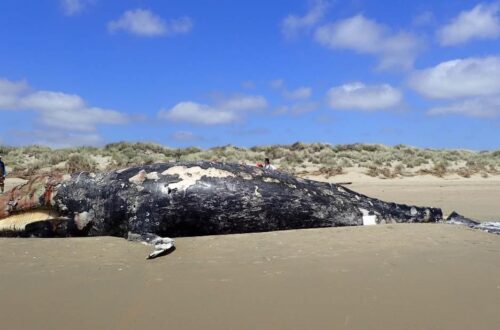
Under the ocean’s surface, there’s an underwater symphony. Blue whales and other marine mammals fill the water with songs and calls, almost like an underwater orchestra. To eavesdrop on this symphony, scientists use special tools called hydrophones — microphones designed to work underwater. In this case, researchers used a hydrophone anchored 3,000 feet below the surface. What Did the Scientists Find? Over six years, researchers from the Monterey Bay Aquarium noticed something troubling along the California Coast. Blue whales and fin whales began singing less often when the ocean got unusually warm. Scientists say the silence is a serious warning. Meanwhile, some whales that eat lots of different things (like…
-
Melting Permafrost in Siberia is Creating Explosive Craters
Imagine this: you’re walking across the frozen tundra in Siberia and—whoa—there’s a giant hole in the ground, big enough to swallow a house. No, it’s not a scene from a sci-fi movie. These craters are real, and scientists have been finding more of them over the past decade. The big question: what’s going on? What’s Hiding Under the Ice? Siberia is covered in permafrost, soil that usually stays frozen solid all year long. But, as the planet heats up, permafrost is thawing faster than ever. That’s already causing big problems you can see—like sinkholes opening up, telephone poles leaning, roads and runways cracking, and forests where trees just topple over.…
-
Eco-Smart Products That Make a Difference
Taking care of the planet really matters to me, so I’ve been trying to make small changes in my life over time. I first drove hybrid cars, like the Honda Insight and later the Prius Prime, which worked great for everyday driving. A few years ago, I made the jump to a fully electric car—and honestly, I love it! At home, I’ve been swapping out old products for eco-friendly ones, step by step. I bought my current home about three years ago, and though it’s been a financial stretch, my boyfriend and I invested in solar panels, a heat pump system (for heating, cooling, and hot water), and an induction…
-
Turning Sunlight into a Lifeline: Clean Energy in the Amazon
Part One I’ve been lucky enough to travel to the Peruvian Amazon. Many families there live without electricity, refrigerators, and wash their clothes in nearby rivers. Something as simple as flipping on a light switch or keeping food is a daily struggle. For many Indigenous communities in the Amazon, this is just everyday life. But even with all these challenges, something amazing is starting to shine through — a spark of hope powered by the sun and built on deep respect for the land. The Big Problem: Power and Pollution in the Amazon The Amazon isn’t just a forest — it’s is one of the most amazing places on Earth.…
-
The Hidden Climate Impact of Bottom Trawling
As a scuba diver, I’ve seen the wonders of the undersea world—brilliant coral reefs, swaying seagrass meadows, and the incredible creatures that call these places home. That’s why what happens with bottom trawling feels so devastating. Picture this: a huge fishing boat drags a massive, weighted net across the seafloor. It tears through everything in its path, scooping up fish. At the same time, it crushes coral reefs, seagrass meadows, and habitats that have taken centuries to grow. Behind it, clouds of dark mud swirl like an underwater storm. Even stingrays and baby sharks get trapped, with no chance of escape. This method, called bottom trawling, is one of the…
-
No, LA Didn’t Run Out of Water During the Fires
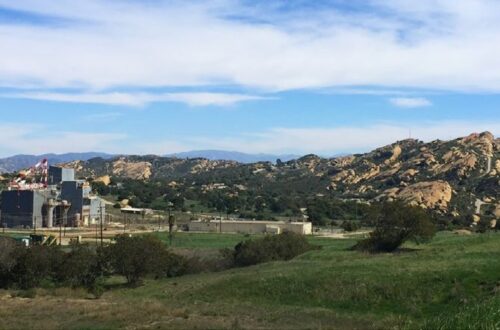
Fact-check It’s been almost eight months since wildfires tore through Los Angeles County, but the wild rumors just won’t quit. Some people say “LA ran out of water.” Others claim “California didn’t take care of its forests.” Then there are the over-the-top ones—like fires being part of a plot by “global elites” to clear land, or a tiny fish called a smelt being the cause. And my favorite? That Governor “Newscum” (yep, that’s the nickname floating around online) refused to sign a “magic” water plan that supposedly would have sent endless gallons south every day. Sounds like a comic book, right? But here’s the real question: why do these conspiracy…
-
Building Power! Concrete That Makes Its Own Energy
A team of researchers at Southwest University in China created a special kind of smart concrete that can make and store electricity. They mixed regular cement with a material called PVA hydrogel, making a new type of concrete that stays strong like regular concrete. Bonus: your walls could power themselves while building a greener future! How Smart Concrete Works Inside the concrete, tiny particles and water let electric charges move around. When one side gets hot and the other stays cooler, this ‘thermo-ionic effect’ makes the charges flow and generate electricity. It’s kind of like when a small thermometer creates electricity if it’s hot on one end and cold on…
-
How Reliable Are Satellite Temperature Measurements?
Some people who reject climate science claim satellites are the “real truth-tellers” when it comes to Earth’s temperature. But here’s the kicker: satellites don’t actually measure temperature at the surface where we live—they measure microwave radiation coming from oxygen molecules way up in the atmosphere. That data has to be modeled and pieced together like a giant puzzle. Ground thermometers, on the other hand, give us direct, accurate readings right where it matters most. That’s why scientists worldwide rely on them to track how fast our planet is heating up. Here’s why ground-based measurements are the gold standard: Satellites don’t measure temperature directly Satellites don’t measure temperature directly, or even…
-
Hurricane Erin: A Supercharged Storm Fueled by Climate Change
In August, Hurricane Erin tore across the Atlantic Ocean with winds blasting over 160 miles per hour on August 16. Erin didn’t make landfall, but its effects—big waves, riptides, and rough weather—slammed coastal communities. This created dangerous conditions stretching over 1,000 miles of the East Coast. And here’s the kicker: climate change is making those effects worse. Supercharged: Hurricane Erin’s Shocking Rapid Intensification Erin exploded from a Category 1 storm to a monster Category 5 in less than a day—one of the fastest growth spurts ever recorded. Scientists say this kind of rapid jump is happening more often as our planet heats up. Jim Kossin, a former hurricane expert at…
-
Caught in a Storm of Extreme Events
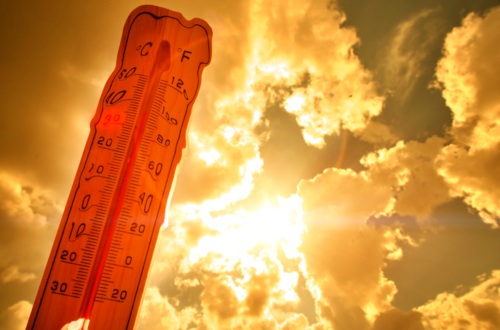
In Arizona, the summer heat has turned deadly. Public health officials warn that extreme temperatures in Maricopa County may have already claimed more than 400 lives. Across the ocean, Southern Europe is also in crisis, with heatwaves fueling wildfires—including 152 new blazes in Greece alone. Far to the north, Alaska faced a very different kind of disaster. A lake of rainwater and melting snow burst through a glacial dam near Juneau, unleashing a torrent that pushed the Mendenhall River to its highest level ever recorded. Streets and homes in the city were swallowed by the flood. Recent heavy rains caused sudden flash floods in Pakistan, killing 337 people. Since late…
-
Is Green Hydrogen Really the Future of Clean Energy?
You’ve probably seen headlines saying that green hydrogen is the next energy savior. Some even say it could help us fight climate change and keep our lights on. But before we celebrate, let’s put it under a microscope. Hydrogen Really Isn’t a Fuel Source A lot of articles call hydrogen an “energy source.” But that’s not exactly true. Hydrogen doesn’t just appear out of thin air — we have to make it using other energy sources. Think of it more like a battery that stores energy made from something else, like wind or solar power. To create hydrogen, we usually use a process called electrolysis — splitting water into hydrogen…
-
Floods: The New Normal?
August 13, 2025 Floods aren’t just breaking records—they’re breaking lives. Picture this: streets turned into raging rivers, rooftops barely peeking above swirling brown water, and rescue boats zigzagging through what used to be quiet neighborhoods. Right now, parts of the Midwest are drowning. Not long ago, New York City’s subways became underground lakes. Last month, Beijing was hammered with a year’s worth of rain in just days, killing 38 people. In Texas, massive floods claimed 119 lives. And now, Tennessee is under siege from rising water—where one family’s life ended in an instant when flood-loosened trees came crashing down on their car. Torrential rains swamped homes and roads across Mexico…
-
The Truth Behind the Offshore Wind: Who’s Really Opposed?
Part One When I retired from NASA’s Jet Propulsion Lab in early 2024 and moved to California’s Central Coast in 2022, I had big plans for my next chapter—spending more time with my grandkids, and finally taking those classes I’d been dreaming about: geology, astronomy, maybe even jewelry making and flower arranging. But those plans took a turn when I started reading wild claims about offshore wind: that it kills whales, is worse for the environment than fossil fuels, and would ruin our coastline. After years of working in science communications and battling climate misinformation, I knew better than to take those claims at face value. So I did what…
-
Silicone vs. Plastic: Which Is Really Better?
Many people think silicone is a good alternative to plastic. I thought so too! I read environmental websites that call silicone, “a healthier choice than plastic” or “beneficial because of its exceptional temperature resistance”. But is it really better than plastic? Silicon is found naturally in the Earth, but it’s hard to get. That’s why silicone products are usually made from something easier to find—silica, which is found in beach sand and quartz. But turning silica into silicon isn’t the end of the process. To make silicone (the stuff used in kitchen tools, baby products, and more), silicon has to be mixed with chemicals made from fossil fuels. So even…
-
Shutting Down Our Eyes on the Earth—and Beyond
The current Administration wants to make big changes to NASA—shutting down our eyes on the Earth and beyond. They also want to stop the Agency from working on future science projects, especially those studying Earth and climate. Instead, their plan focuses on a smaller, “leaner” space agency that would send the first American astronaut to Mars. But scientists say this will end NASA’s longtime leadership in space science—and hurt our ability to understand the fast changes happening on Earth. In May, the Trump administration shared a plan to cut NASA’s science budget nearly in half—from about $8 billion to $3.9 billion. While the final bill kept much of NASA’s overall…
-
Beneath the Surface: Hidden Risks of a Warmer World
We’re used to hearing about floods and wildfires, but there’s a great deal of climate change happening beneath the surface. You’ve likely heard about ocean acidification and coral bleaching, but there’s so much more we just can’t see. On a small research boat in Chesapeake Bay, a scientist collected water to study tiny living things called microbes. All around, people were enjoying the beach, unaware that dangerous bacteria called Vibrio were hiding in the water. Vibrio live naturally in oceans and rivers. Some types are harmless and even help the environment by recycling nutrients. But others can make people very sick—with symptoms like stomach cramps, diarrhea, or in rare cases,…
-
Brewing Clean Energy with Caffeine, Cans, and Seawater
Scientists at MIT have recently come up with a cool way to brew clean energy fuel using ingredients like seawater, caffeine, and even aluminum from empty soda cans. This fuel doesn’t release carbon dioxide, which makes it much better for our planet. Here’s How It Works: Aluminum is a super reactive metal. When it touches water, it creates hydrogen gas. Hydrogen can be used as fuel to power things like cars, generators, or even rockets—without causing pollution. But normally, aluminum has a layer of protection on it that stops this reaction. The MIT team found a way to make aluminum react with water by mixing it with something called a…
-
Asian Elephant Coloring Page
-
The Shocking New Threat to Asian Elephants: Skin Poaching
Let’s face it—when money’s involved, humans often show little or no respect for animals. That’s why poachers are now killing Asian elephants not just for their tusks, but for their skin. It’s a horrifying story—one that brought me to tears while researching and writing—but understanding what’s happening is the first step toward protecting these gentle, endangered giants. Poachers are targeting elephants in places like Myanmar—a known hotspot for the illegal wildlife trade. Instead of focusing only on tusked males, they now kill any elephant they can find—males, females, even babies. Why? Because elephant skin is being sold for jewelry, beads, and traditional medicine. Poachers Are Wiping Out Myanmar’s Elephants Myanmar’s…
- Uncategorized
The Truth About Air Fresheners–They’re Toxic!
Guest Post by Helen Lovell-Wayne, MS, Edited by Susan Callery This article was written to help people understand what’s really in the air fresheners they use. If enough people speak up and make safer choices, companies may start making healthier, more eco-friendly products. You’ve probably seen or used air fresheners like Tropical Rain Forest, Hawaiian Breeze, or Apple Cinnamon. They come as sprays, plug-ins, gels, or even little trees hanging from car mirrors. Many people use them to make their homes or cars smell nice—but these products can be harmful. Tropical Rain Forest, Summer Sky, Hawaiian Breeze, and Apple Cinnamon are just some of the air freshener fragrances the public…
-
Vanishing Insects and the Silence of the Forests
Special thanks to Jay Thompson for his contribution to this blog! Vanishing insects are the silent alarm of climate change—one we can’t afford to ignore. Some of my most cherished memories come from forests, such as the rainforests of Borneo, or in Tasmania where I was greeted by a curious pademelon at the entrance of my log cabin. In the Amazon rainforest I watched wild macaw parrots gather at clay licks — a vibrantly colorful and magical sight I wish everyone could experience. In nearly any forest on Earth, the productions of nature saturate our senses: the smell of moist ground and humid air, the sounds of birdsong, of tree…
-
La Niña Years—Our “Cool” Years—Are Now Warmer Than El Niño Years
Every year, Earth’s temperature changes a little. Sometimes it gets hotter, and sometimes cooler. Scientists track this closely to understand how our climate is changing. But it’s not just about climate change. Natural patterns in the ocean also affect short-term global temperatures. Two of the biggest ones are called El Niño and La Niña. These are part of a system called the El Niño–Southern Oscillation, or ENSO for short. What Is El Niño? El Niño, Spanish for “little boy” happens every two to seven years when trade winds weaken. Warm water builds up in the central and eastern Pacific Ocean, close to South America. This pushes more heat into the…
-
The 7 Types of Plastic—and How to Deal with Them
Do you ever wonder what the numbers inside the triangle on the bottom of plastic containers mean? Those numbers show that not all plastics are the same. In fact, there are 7 types of plastic, and each one is used for different things—and recycled (or not) in different ways. Understanding what these numbers mean can help you make smarter choices and keep more plastic out of the ocean and landfills. When you toss plastic into the recycling bin, you probably think it’s being turned into something new—like another bottle or a piece of clothing. But in reality, that’s not usually what happens. Most plastic doesn’t get recycled. The arrow symbol…
-
Photosynthesis coloring page
-
What is Photosynthesis?
For elementary school students I had lunch with a friend of mine yesterday, and she told me how many people she’s met who don’t understand or remember photosynthesis. Many adults vaguely remember hearing the word, but not how it works or why it matters. I don’t know about you, but I first learned about it back in elementary school. No wonder many adults don’t remember! That’s a big deal, because photosynthesis–a biological “magic trick–is at the heart of life on Earth. 🌞 Here’s How Photosynthesis Works: 🌬️ And as a bonus of photosynthesis, the plant gives off oxygen — the air we need to breathe! Plants Don’t Just Make Oxygen—They…
-
The Truth About Fake Grass: It’s Not So Green After All
When I worked at NASA’s Jet Propulsion Laboratory (JPL) in Southern California, I thought a lot about water—how precious it is here on Earth. Living in drier area, I wanted to save water at home. My front lawn took a lot of it, so I replaced the grass with fake grass, or “artificial turf”. Doing your homework is really important. I tested different types to see which stayed cooler in the sun. I picked one that didn’t get too hot and said it was recyclable. It seemed like a smart, eco-friendly choice. Win-win, right? I didn’t know then what I know now: that fake grass can contain toxic chemicals. That…
-
The World’s Biggest Sand Battery Is Now Working in Finland!
A company in Finland called Polar Night Energy has turned on the world’s largest sand battery in the town of Pornainen. What is a Sand Battery? Imagine a giant thermos filled with about 2,000 tons of crushed soapstone (a type of rock)! The soapstone was basically trash — thrown away from a Finnish fireplace maker. Inside, the sand is heated up to hundreds of degrees using electricity from wind or solar power. The sand holds onto the heat for days, weeks, or even months! How Big is the Sand Battery? The tank is 43 feet tall (13 meters, or about as tall as a four-story building) and 49 feet wide (15 meters,…
-
Vanishing Clouds, Rising Heat: A Warning from Above
Vanishing clouds? Why should we care? We usually think of clouds as just part of the weather—something that blocks the sun, brings rain, or makes cool shapes in the sky. But did you know that clouds also help protect our planet from getting too hot? A new study shows that certain types of clouds are disappearing, and that’s bad news for our warming world. What’s Happening? Scientists studied 20 years of satellite data to learn how clouds are changing. They found that the thick, low clouds that form over the ocean are shrinking. These clouds are important because they reflect sunlight back into space—kind of like a giant mirror. When…

Eco Nana
Earth Advocacy for Future Generations